
the story of PRIMROSE wood
The Hawkins Family have farmed and loved every inch of Milden Hall Farm for over 200 years. And we have very green credentials: between them, Christopher and Juliet have nearly 40 years’ experience and interest in wildlife conservation, local history and archaeology; and daughters Ruby Tiger and Daisy have worked for environmental and wildlife charities at home and in Africa. We have a green farm tourism business that includes self-catering and hosting environmental courses on fungi, ponds and woodland; and the business achieved Carbon Net Zero in 2025.
The burial of a friend at a natural burial site was so moving and so aligned to our whole environmental ethos at Milden, that we felt inspired to develop our own Primrose Wood Natural Burial Ground here on the farm, opened in 2026. We hope that the story of our journey, and photos of progress on each aspect, from the spark of an idea to Primrose Wood opening, will demonstrate the passion and understanding our family have for the environment, wildlife and historic landscape and the joy in sharing it.
In 2024, we set about researching the increasing demand for environmentally conscious green burials and carrying out wildlife, soil and water surveys. We chose an accessible, rural, arable site for Primrose Wood that will become a woodland stepping stone for wildlife between two ancient woodlands, part of Milden Thicks Site of Special Scientific Interest. With the wisdom and generous support of The Natural Death Centre, and fellow members of the Association of Natural Burial Grounds, we applied for planning permission and waited ….
Wildflower establishment
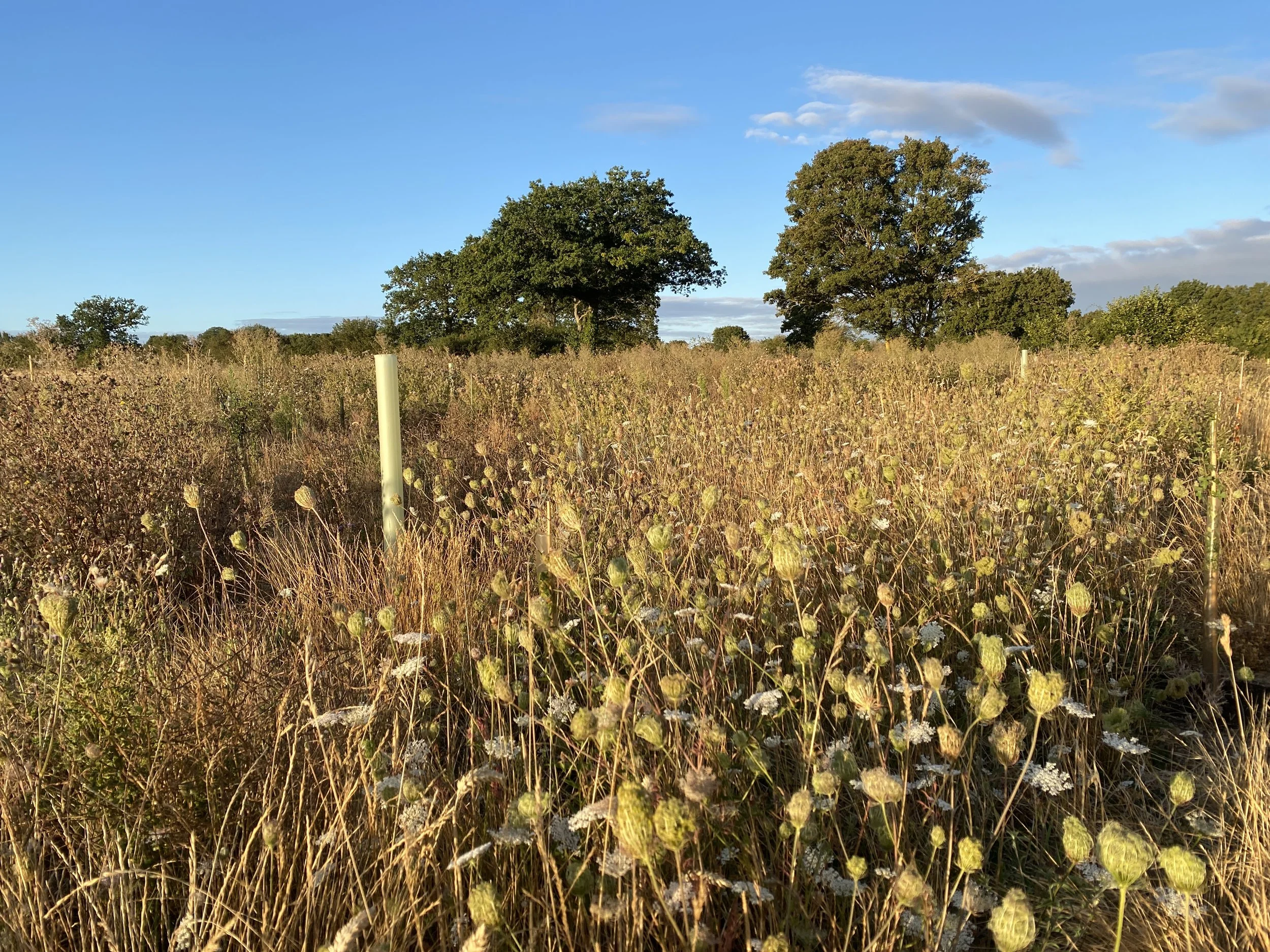
In anticipation of a successful planning application outcome, collected wildflower seed for two summers from our ancient meadow, with pepper saxifrage, devil’s bit scabious, sulphur clover and other delights. We used this seed to sew into wheat stubbles of what was then called Brands Field in autumn 2025 to create the meadow element of the site and then hoped the yellowhammers and linnets wouldn’t eat all the seed. And hoped for rain. It absolutely poured … for much of the winter! When dry enough, we planted 1,000 woodland wildflowers amongst the young planted trees. By spring 2026, wildflower seedlings were evident …. and after a droughty, hot March-August, everything looked parched except for wild carrot that appeared to be thriving!
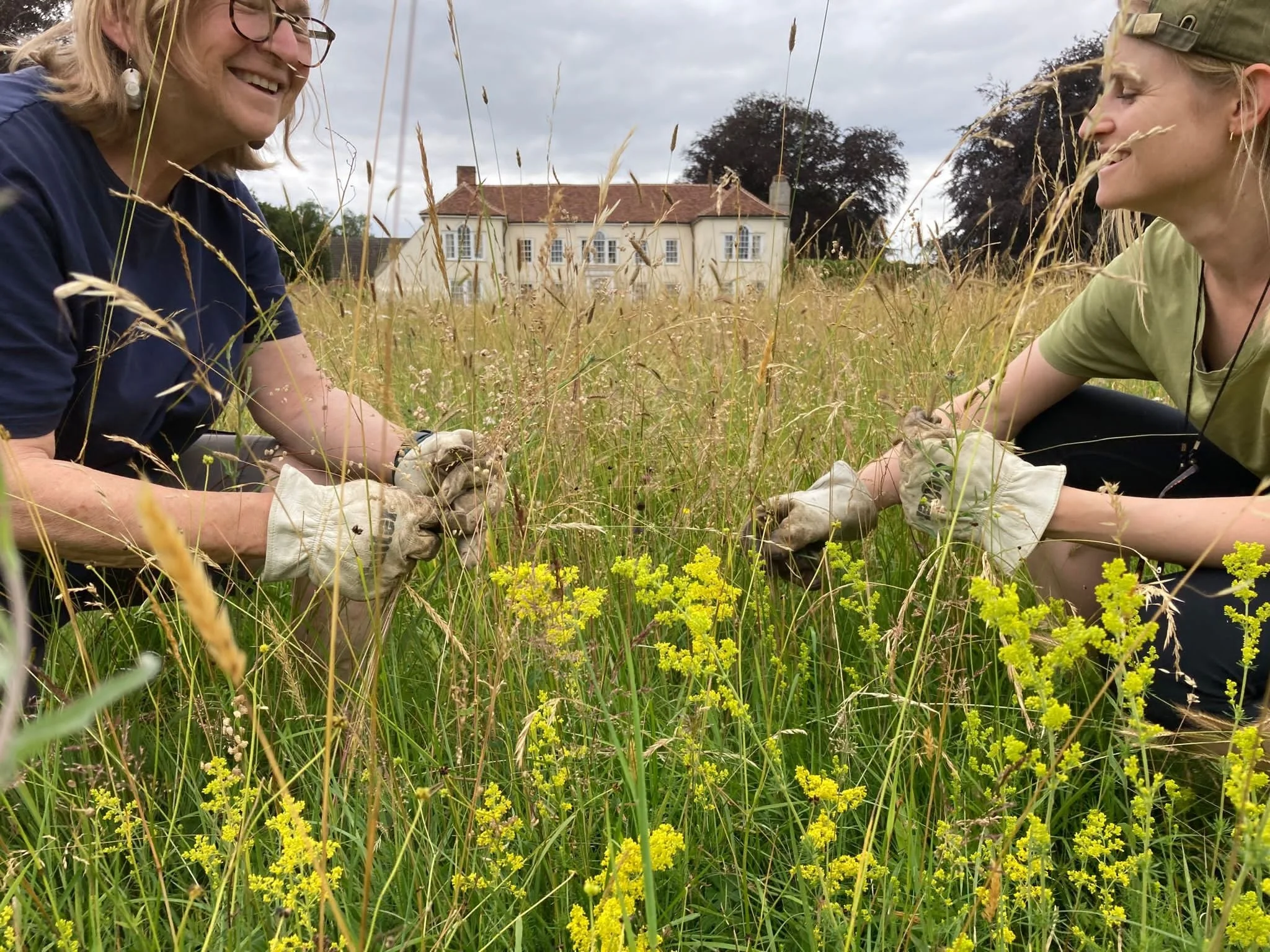
Hand seed-collecting from ancient meadow County Wildlife Site at Milden Hall Farm
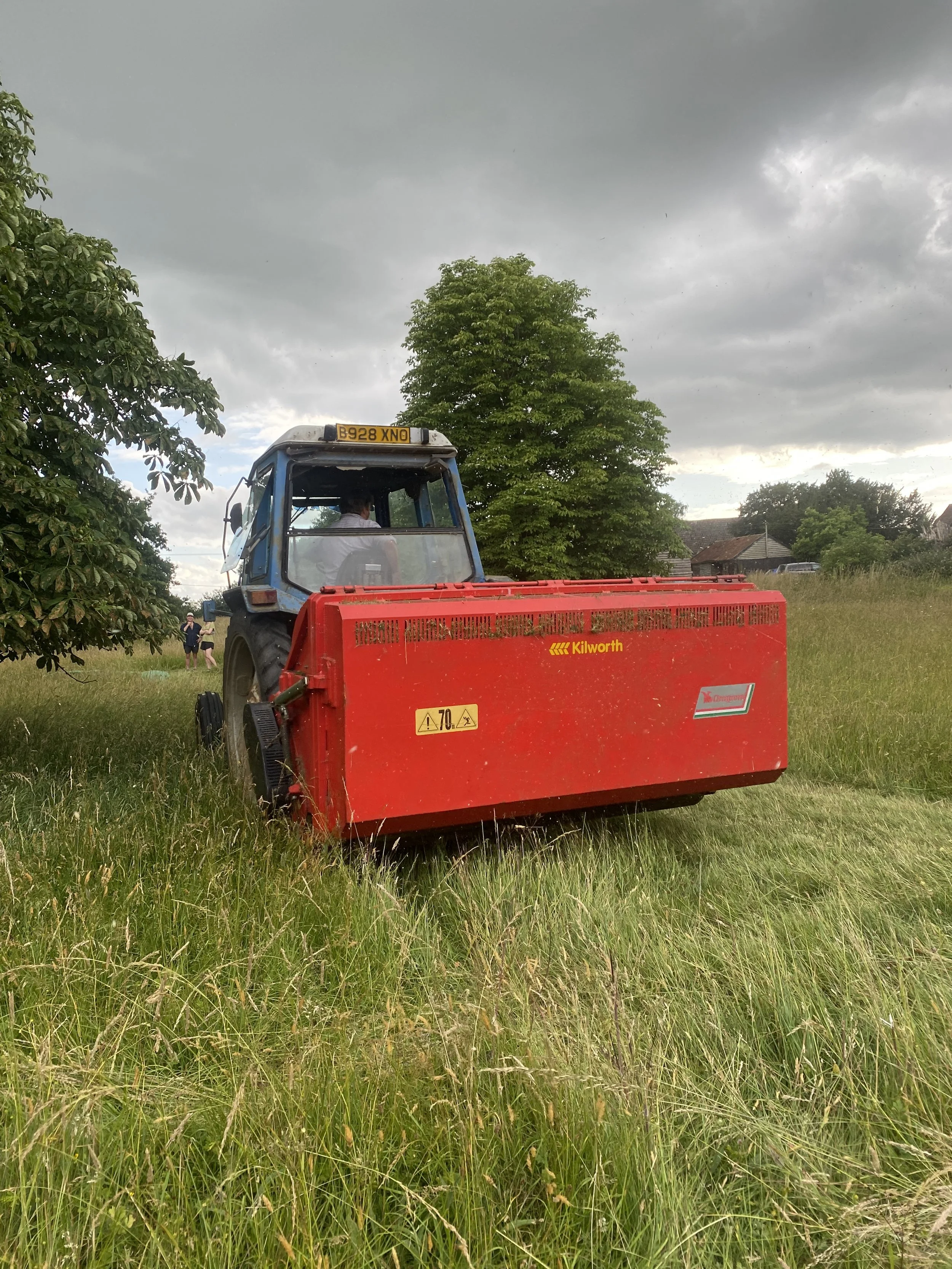
.... and machine seed-collecting.
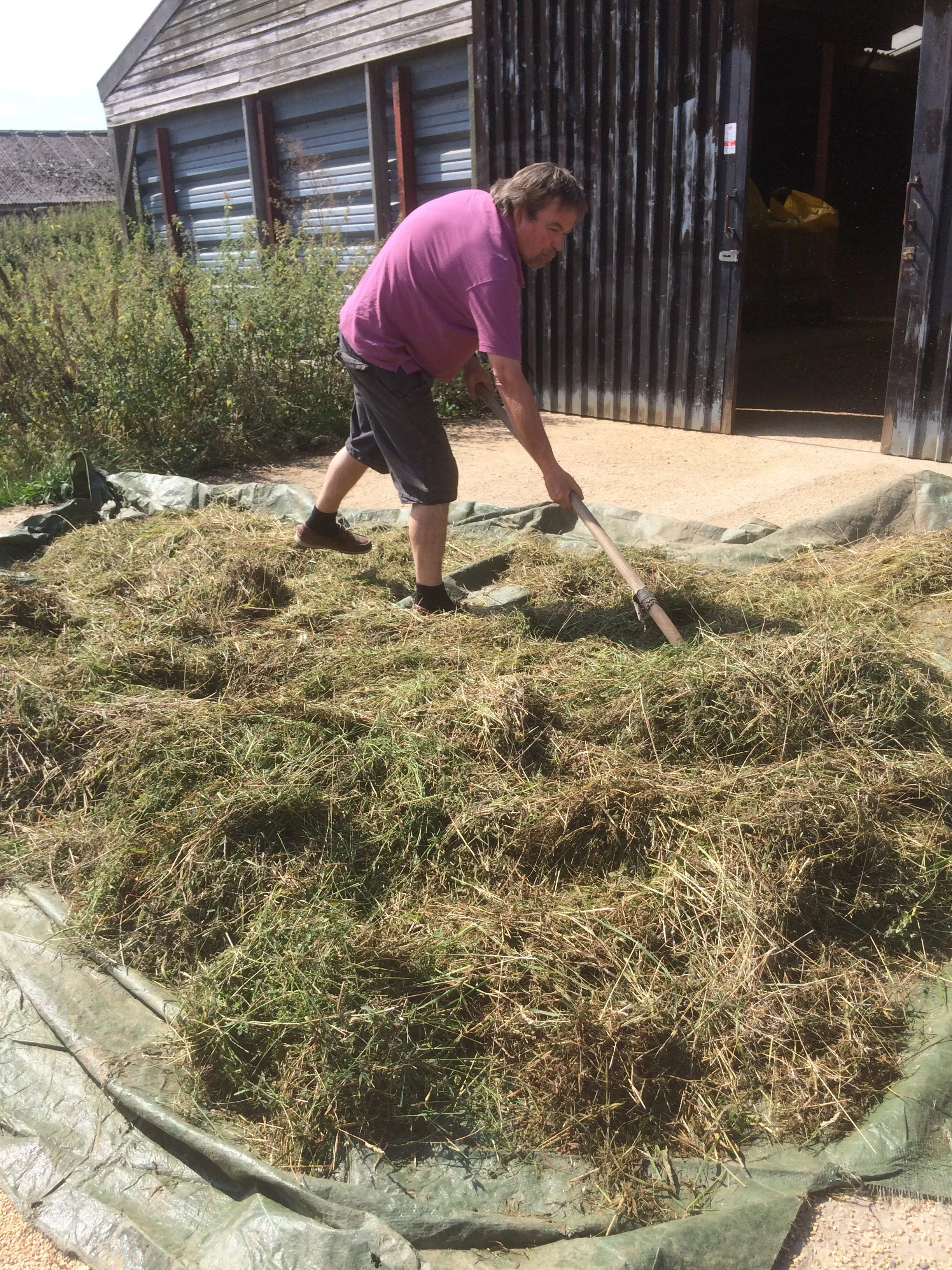
Turning, shaking and drying wildflower seed
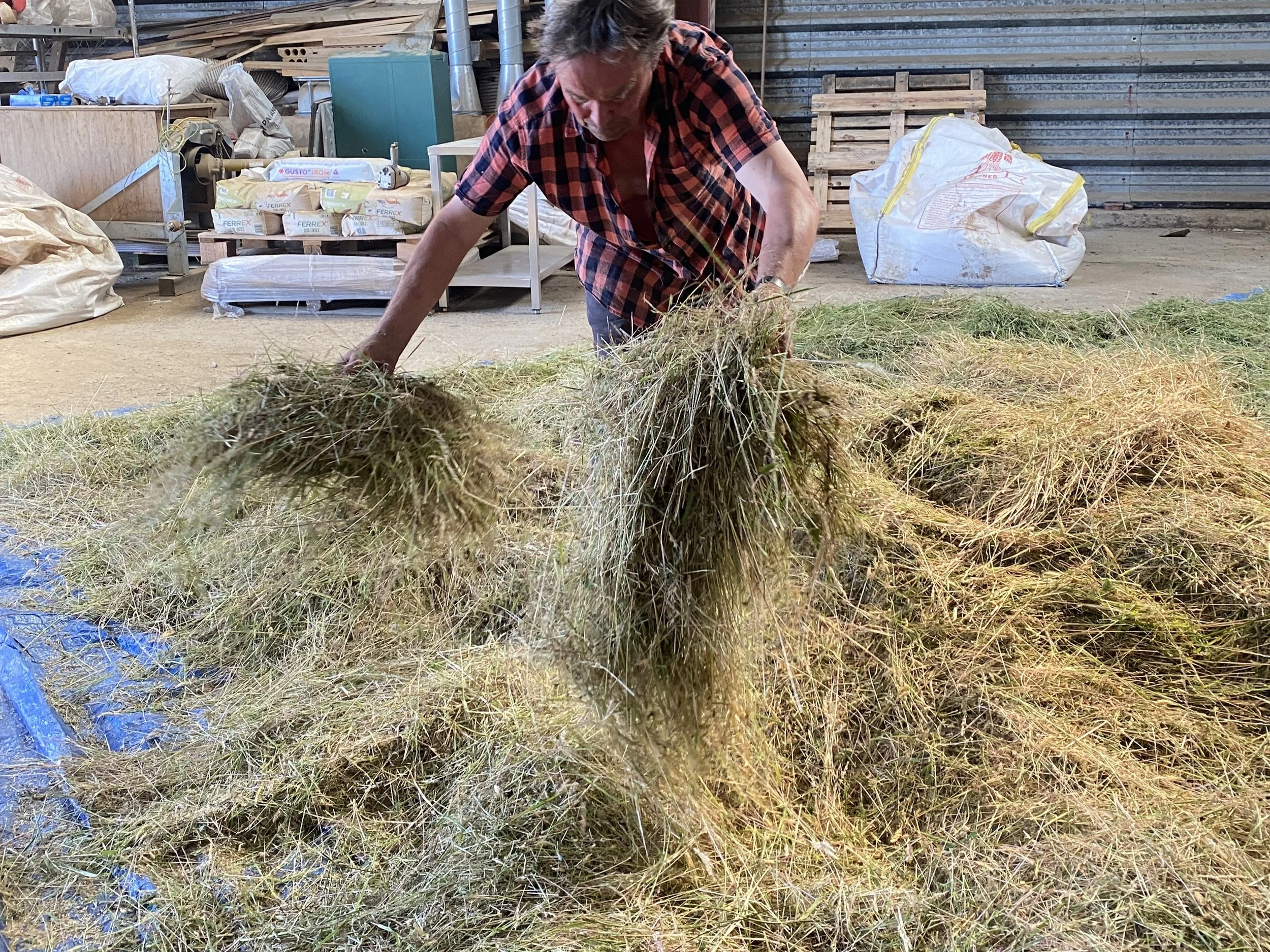
More turning, shaking and dust!
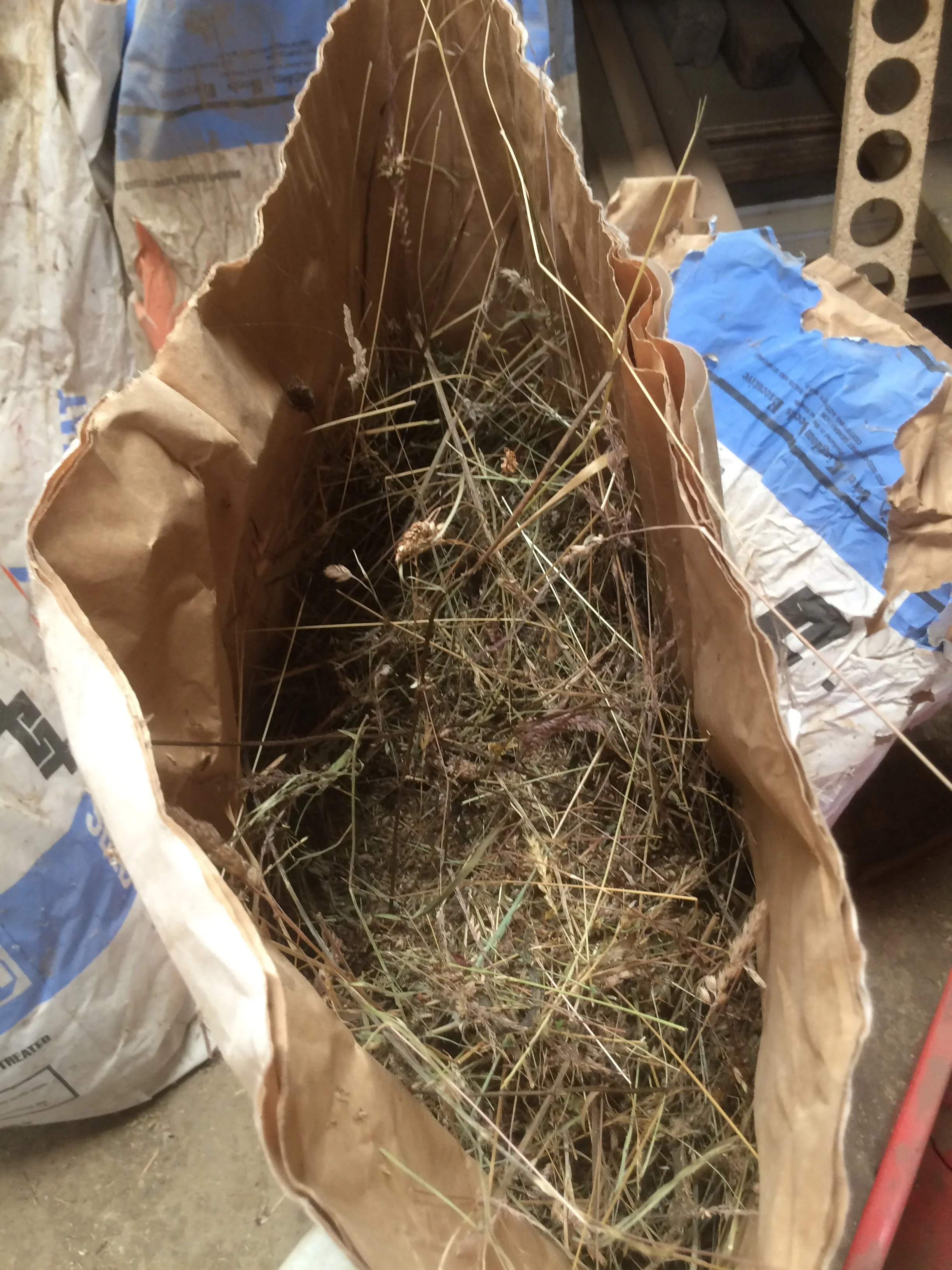
Bagged up dry wildflower seed
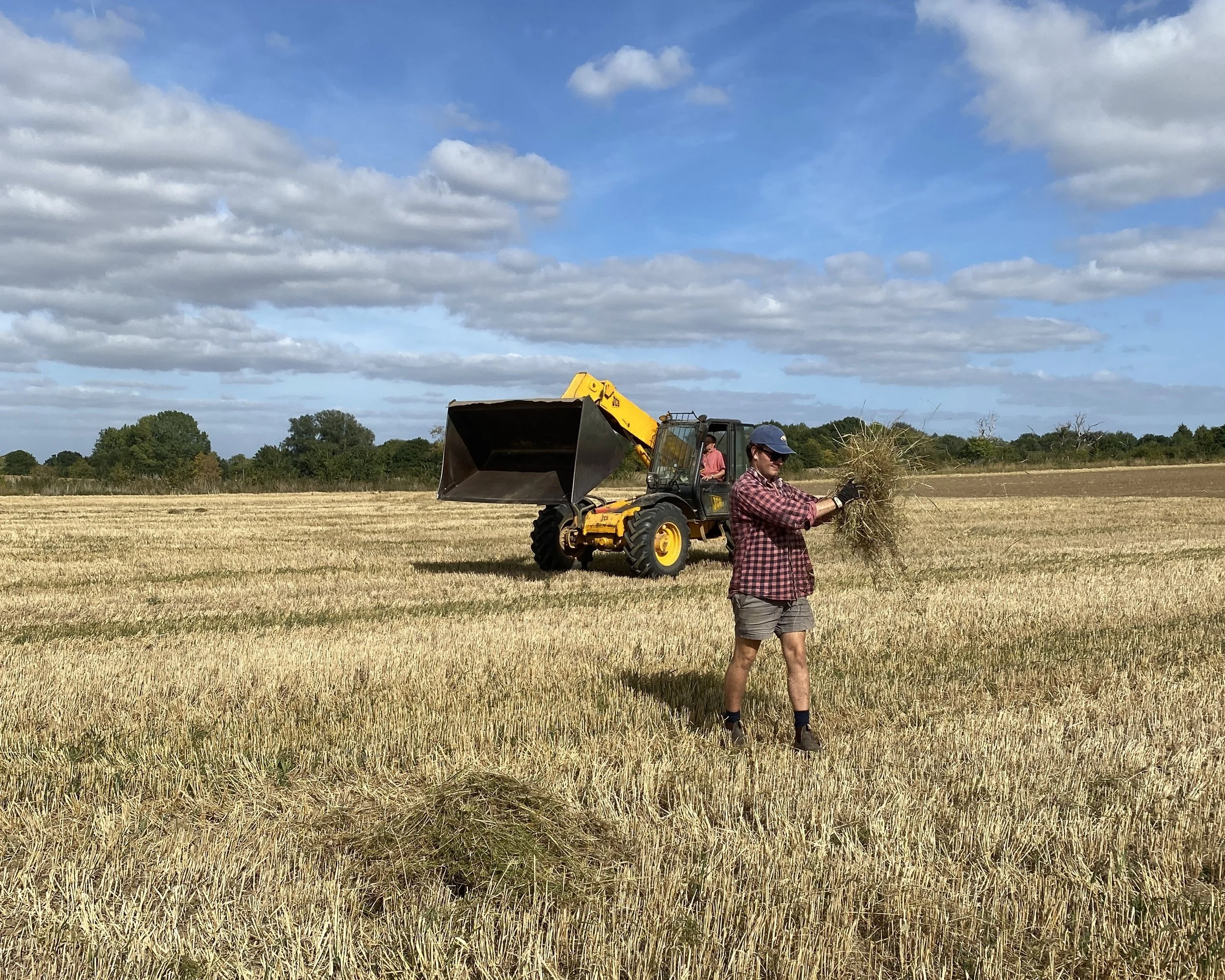
Strewing wildflower seed onto wheat stubbles in autumn 2025
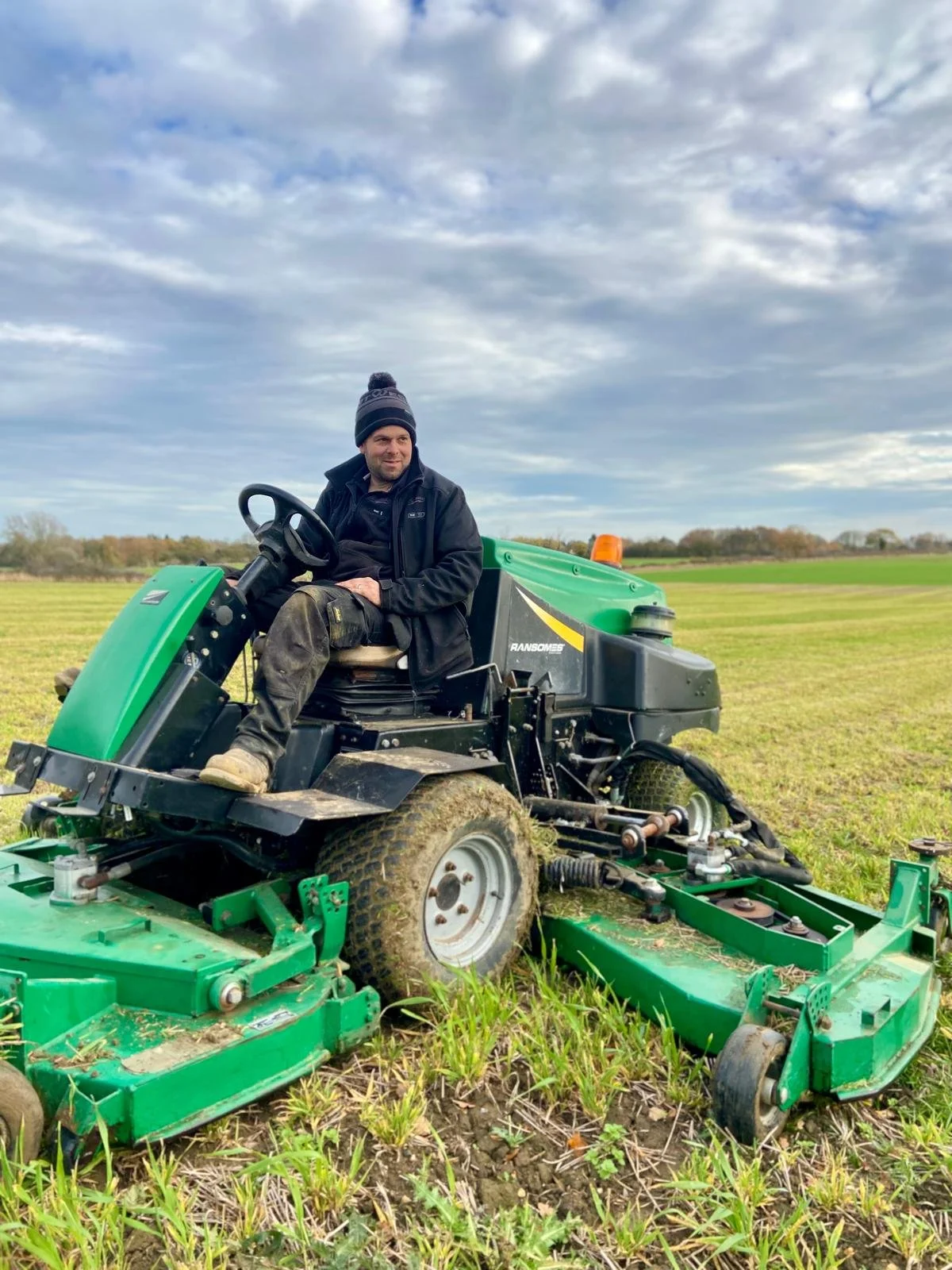
Topping encouraged tillering of seedlings
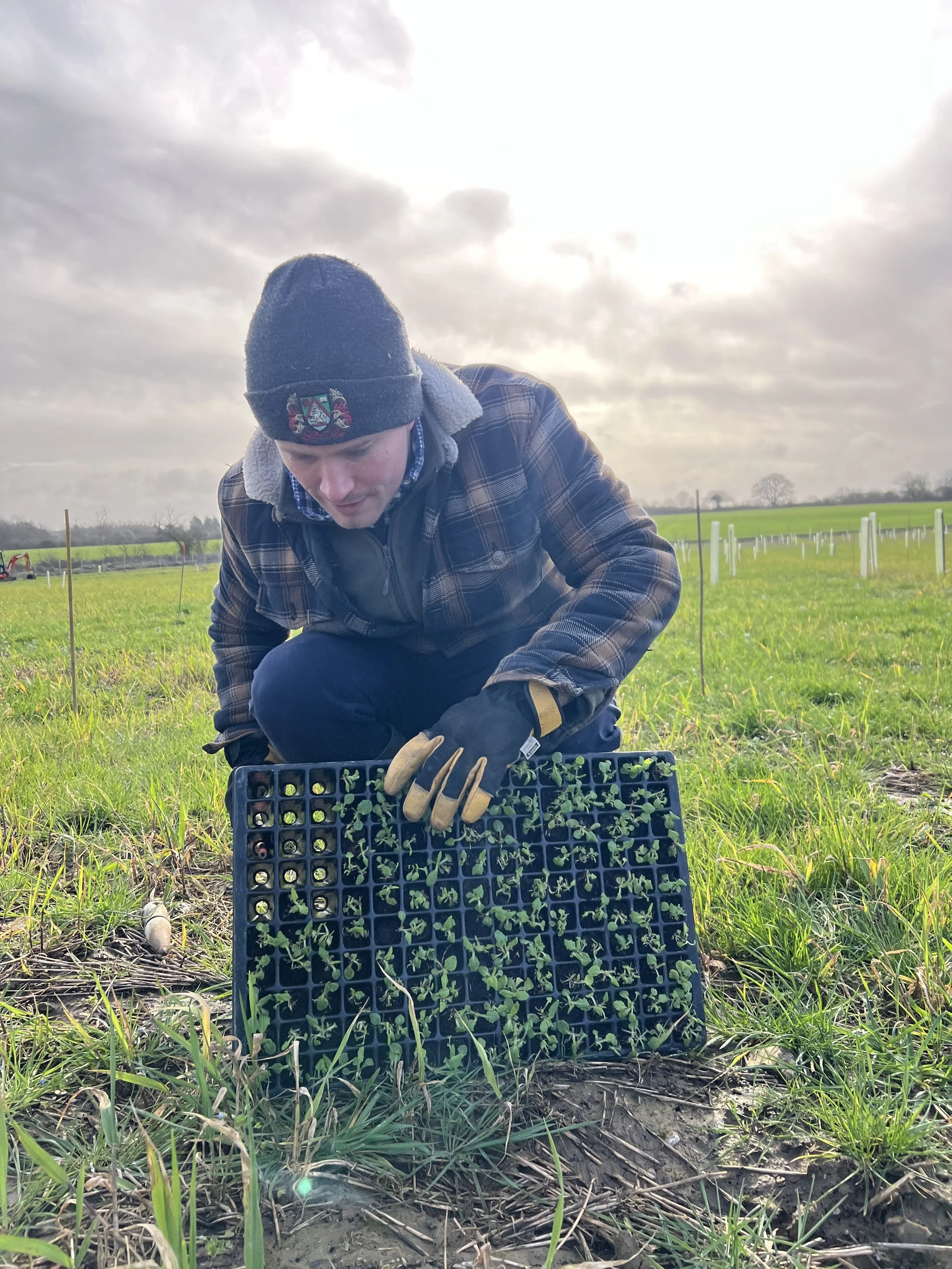
In Feb 2026, woodland wildflower plugs were planted under young trees
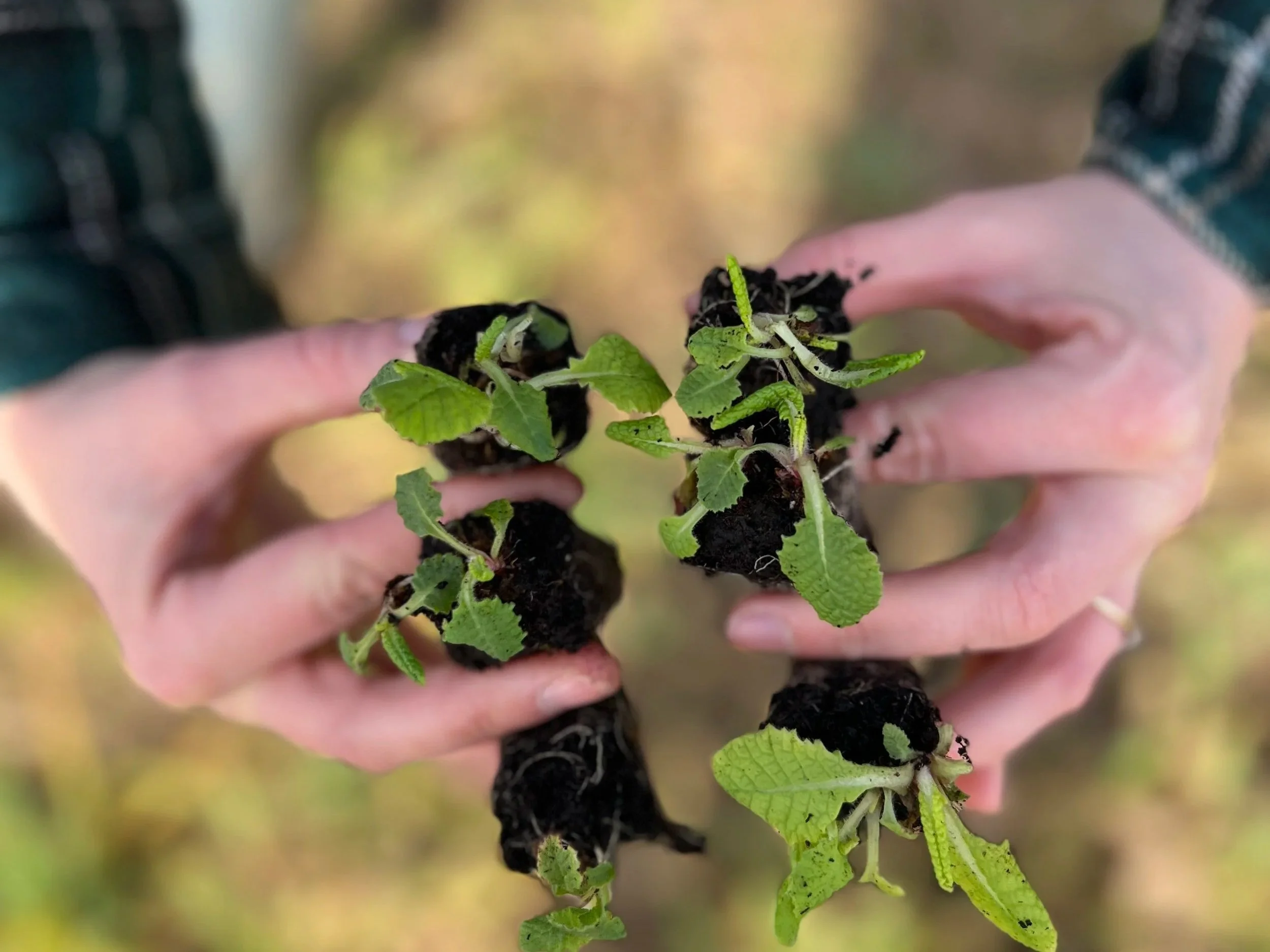
Mini native wildflower plugs - primroses, wood anemones ...
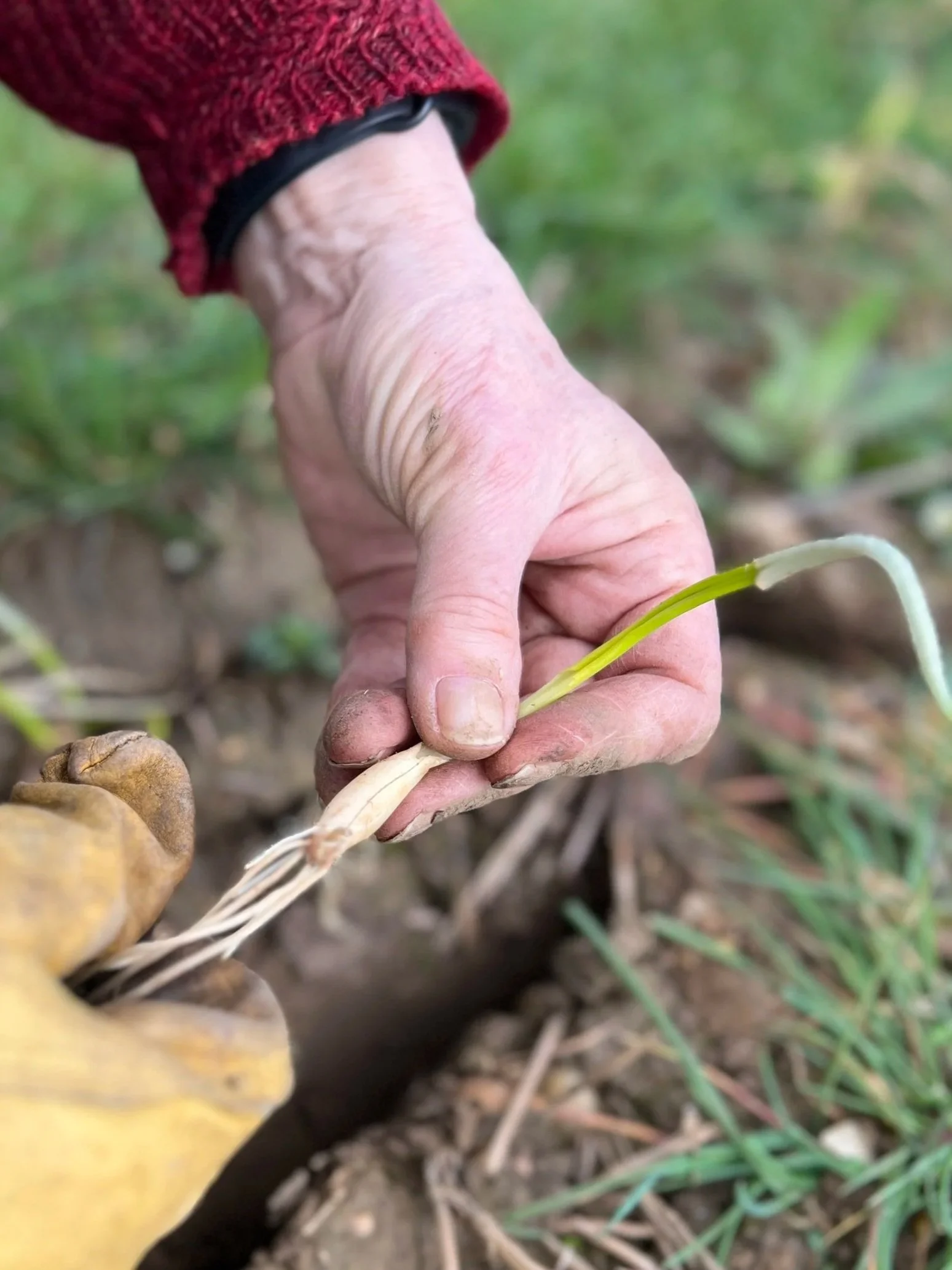
... and bulbs of ramsons and English bluebell
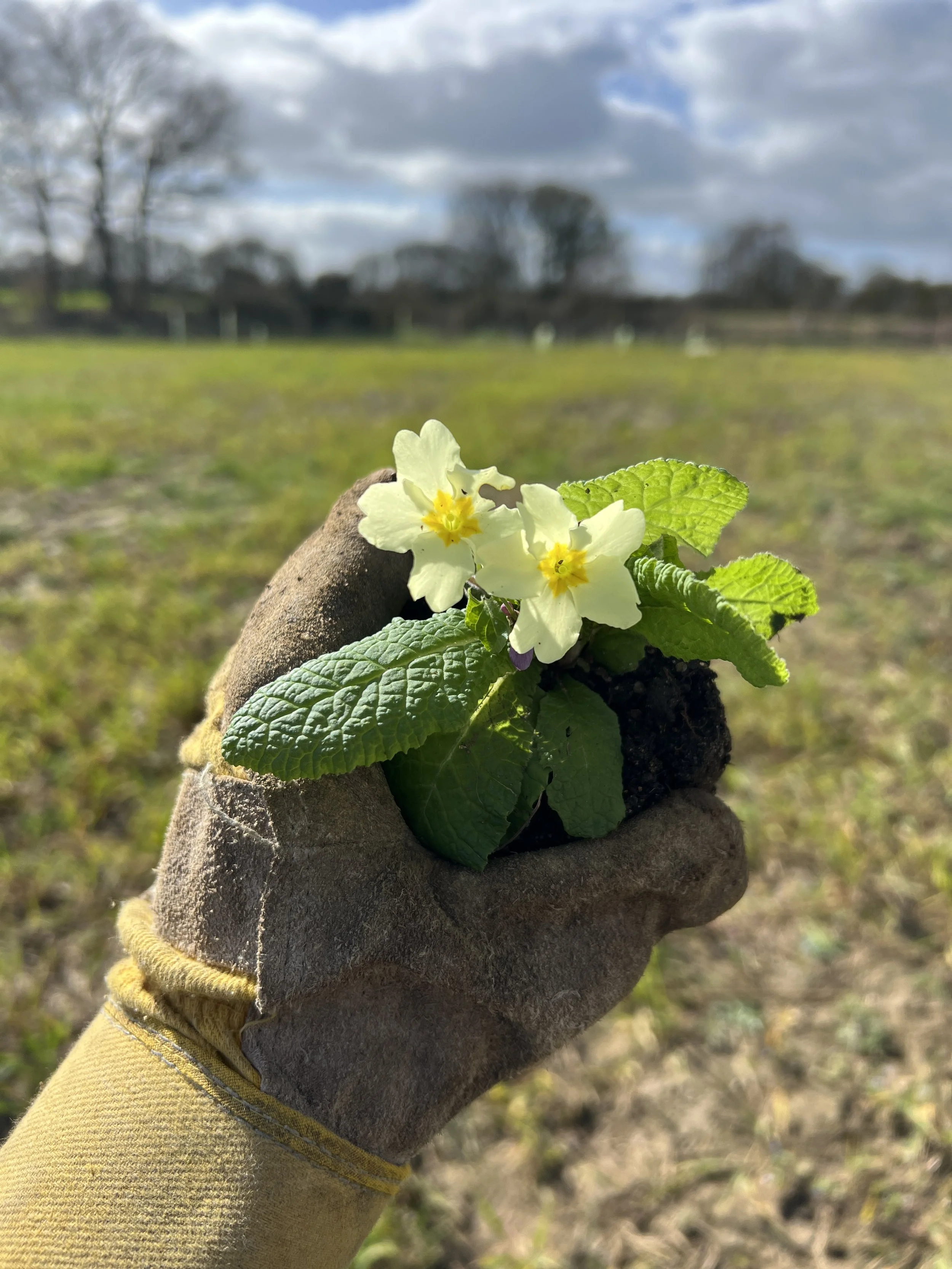
Also, home-grown bigger wildflower plants
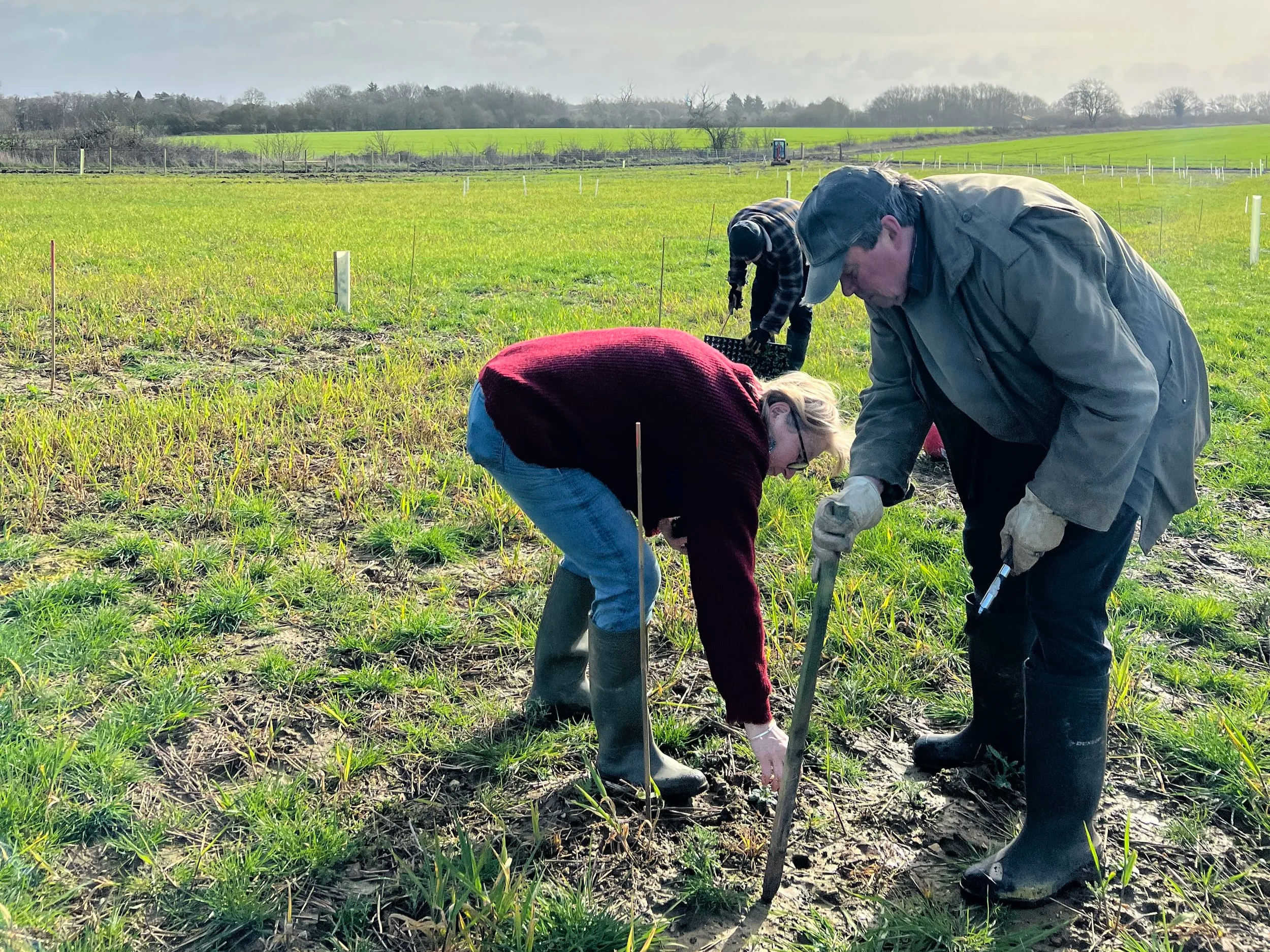
All the team dibbing and ...
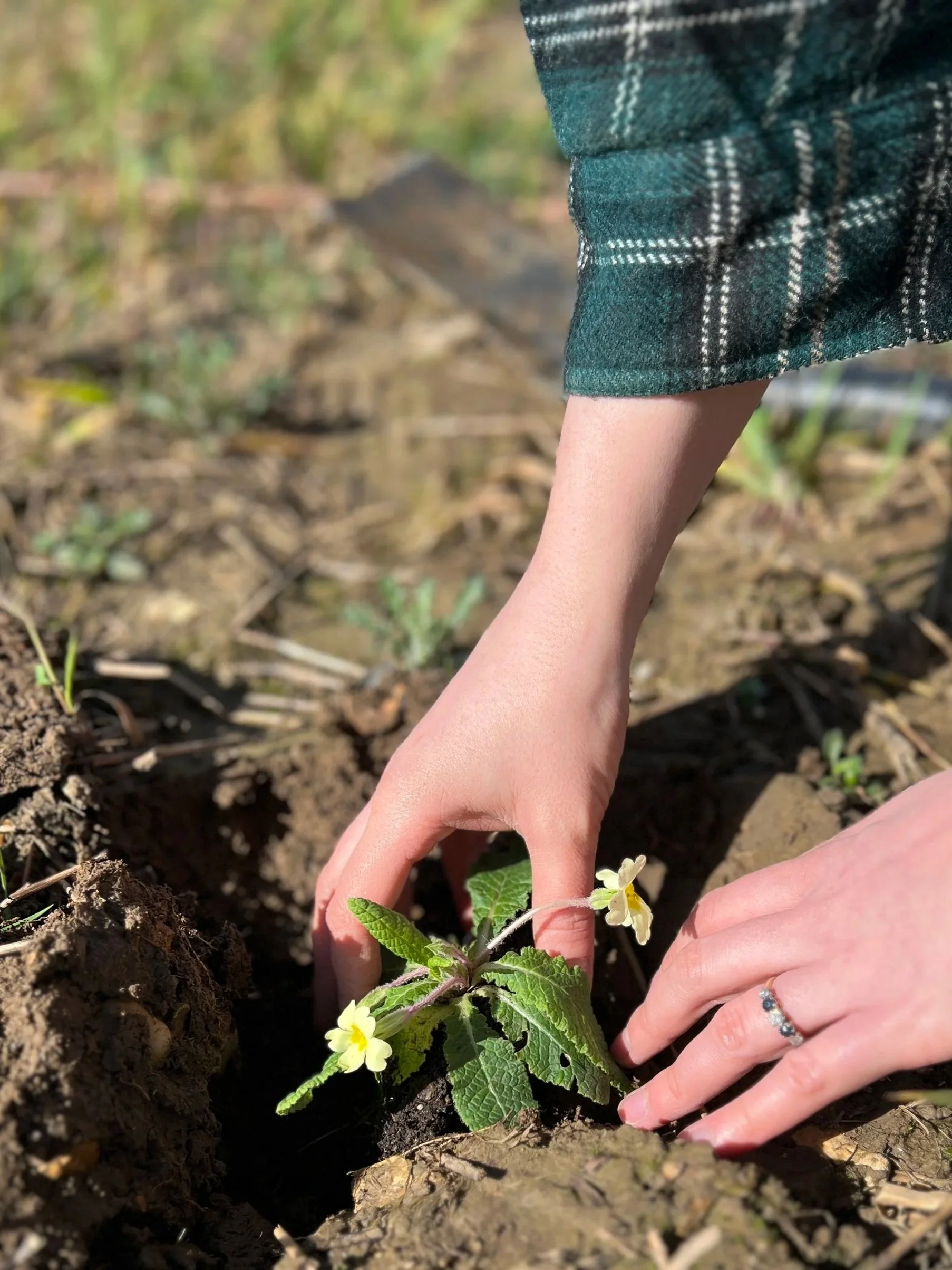
...gently planting primroses, wild garlic, wood anemones ...
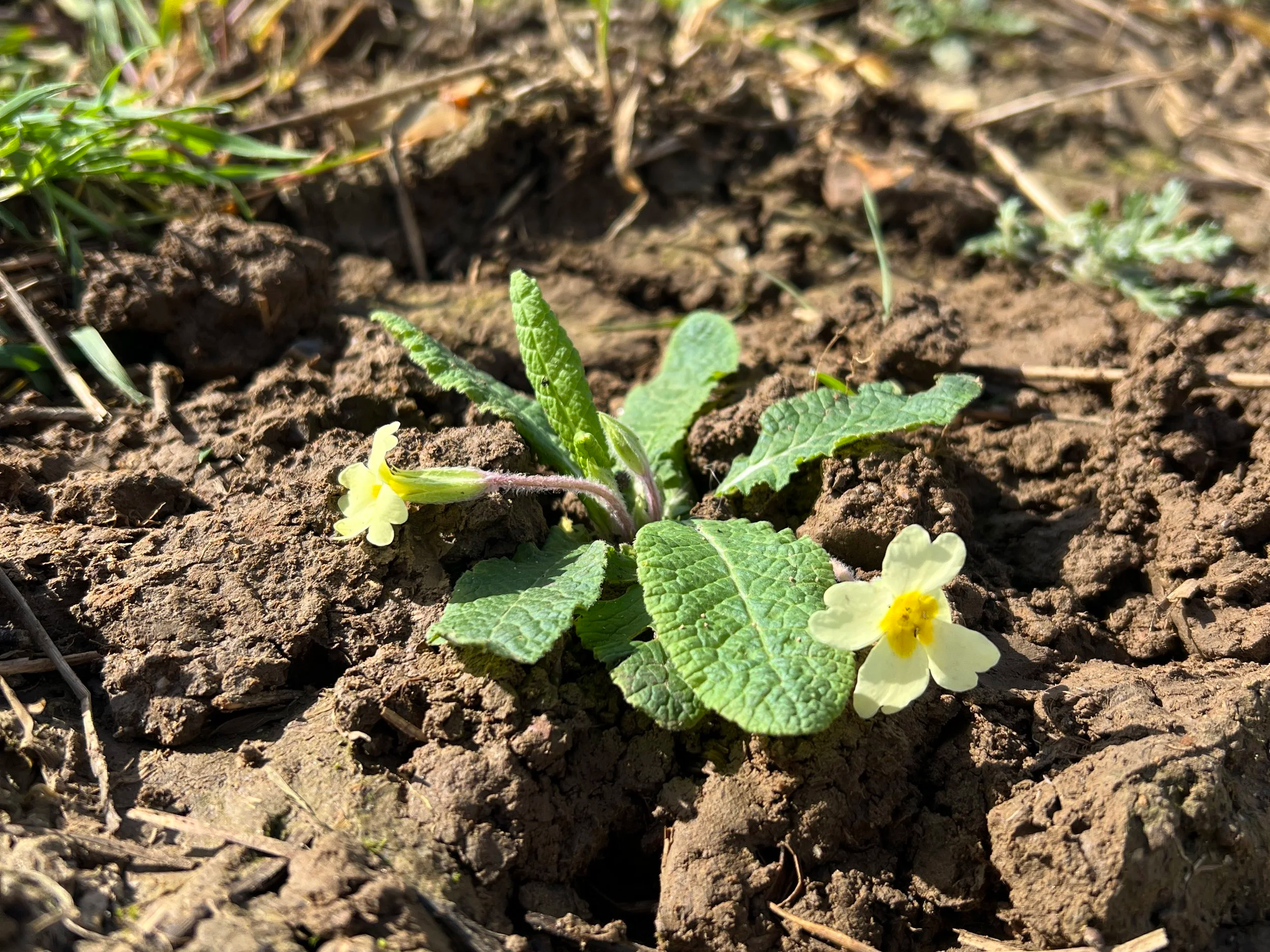
Until 1,000 woodland wildflowers are planted! Now hope for rain!
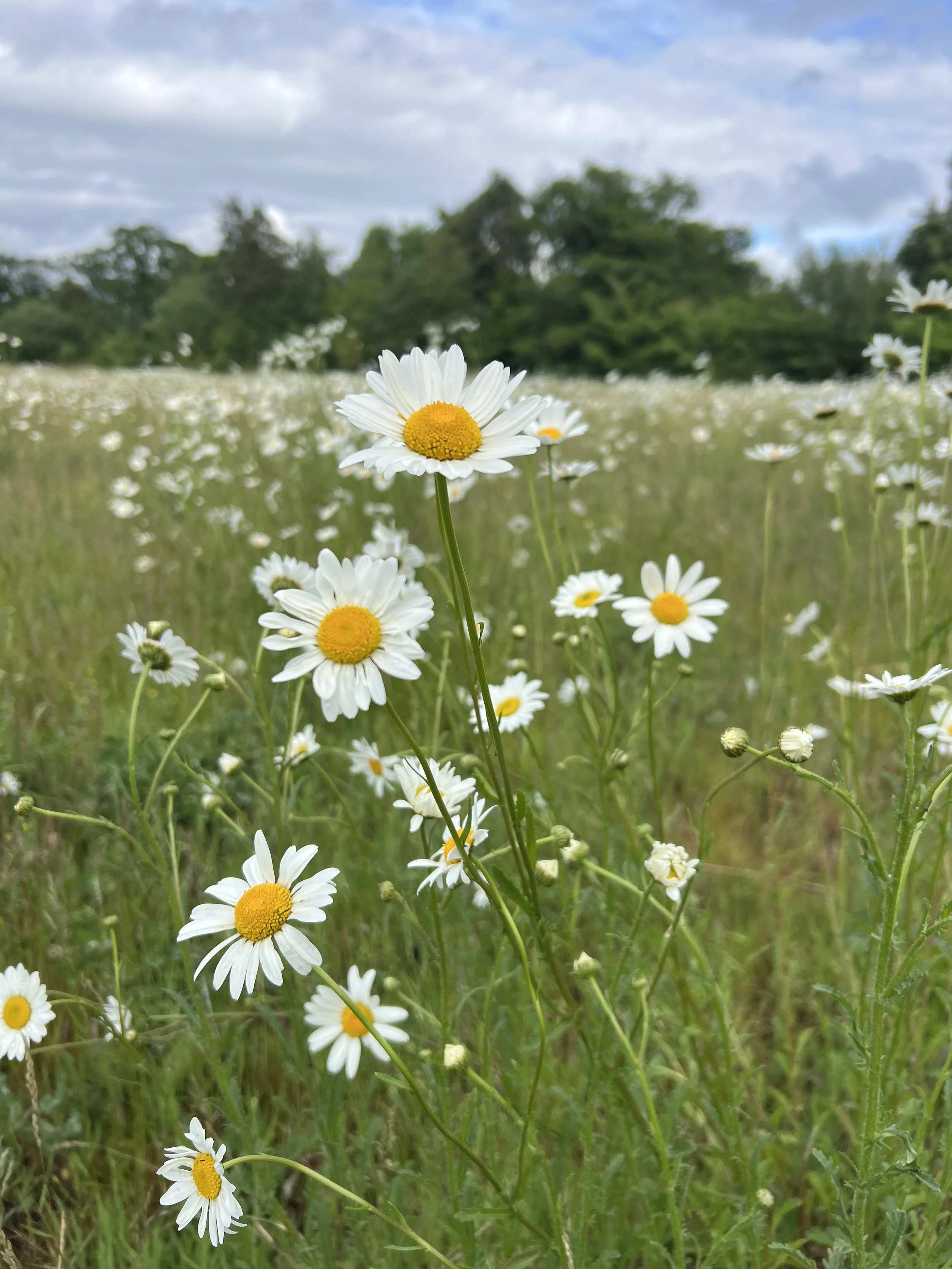
Early summer 2026 saw the first ox-eye daisies established from seed .....
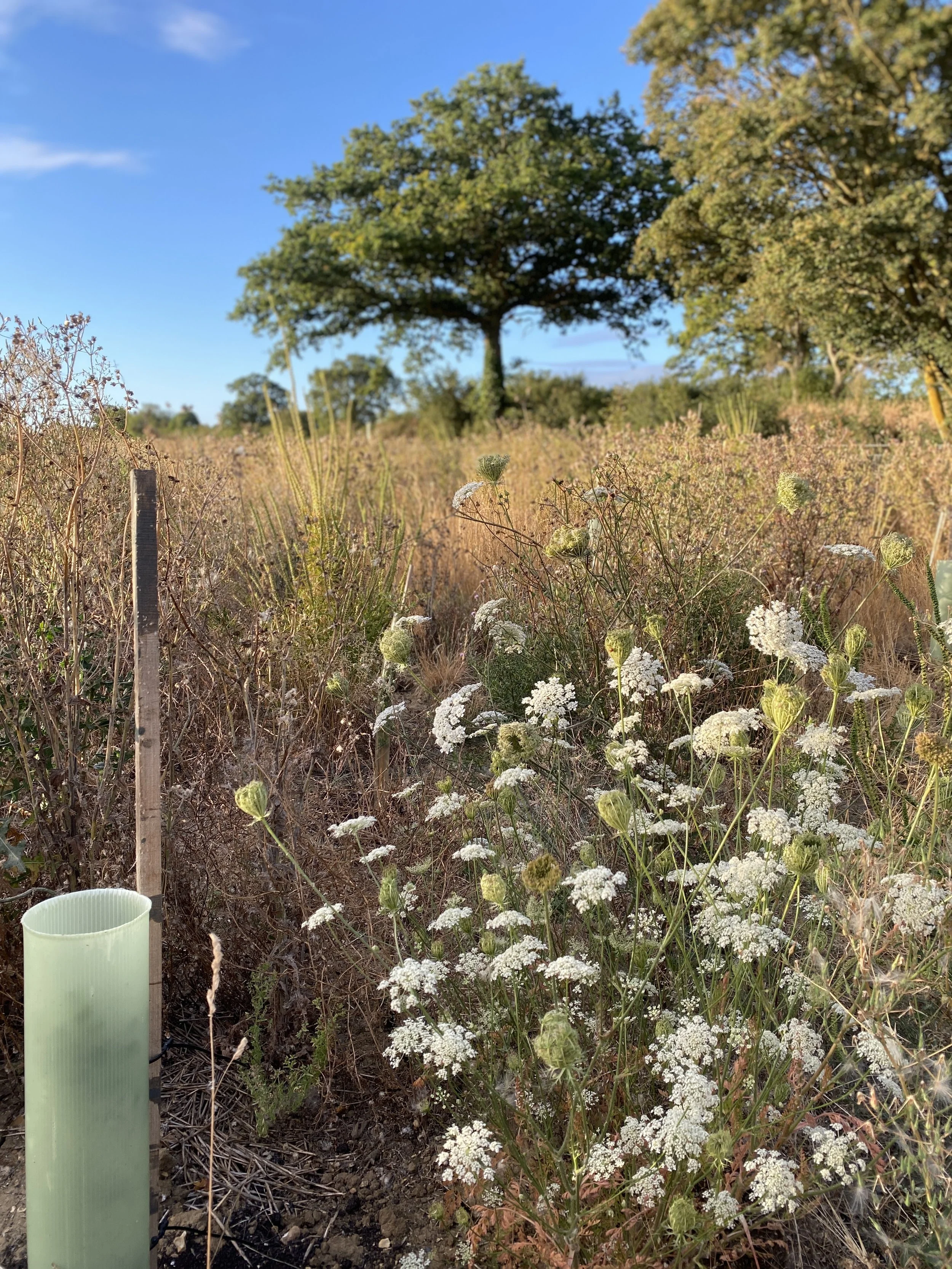
But by August 2026, only wild carrot thrived on the droughty, parched burial ground
Tree, shrub and hedge planting
In February 2026, after a very wet and muddy winter, the ground dried out just enough to allow us on the land for our family team to put up fencing with the help of our new Kubota digger and plant trees and hedges to landscape the site - all with the help of a grant from the Rural Business Growth Fund, via Defra. We sourced native trees and shrubs that will thrive on our clay soils and are already growing in the nearby ancient woodlands - and two native black poplars donated by the Suffolk Tree Warden Scheme. We spent several happy weekends planting the trees, mulching and protecting them. Along came the sun, the heat and an official drought. Fortunately, watering recently planted trees and shrubs, was exempt from Anglia Water’s hosepipe ban but it has been a struggle in very hot, dry weather to get water around the site in buckets trying to keep the trees alive and by August 2026, some losses had inevitably occurred. The majority, however, are alive and well.
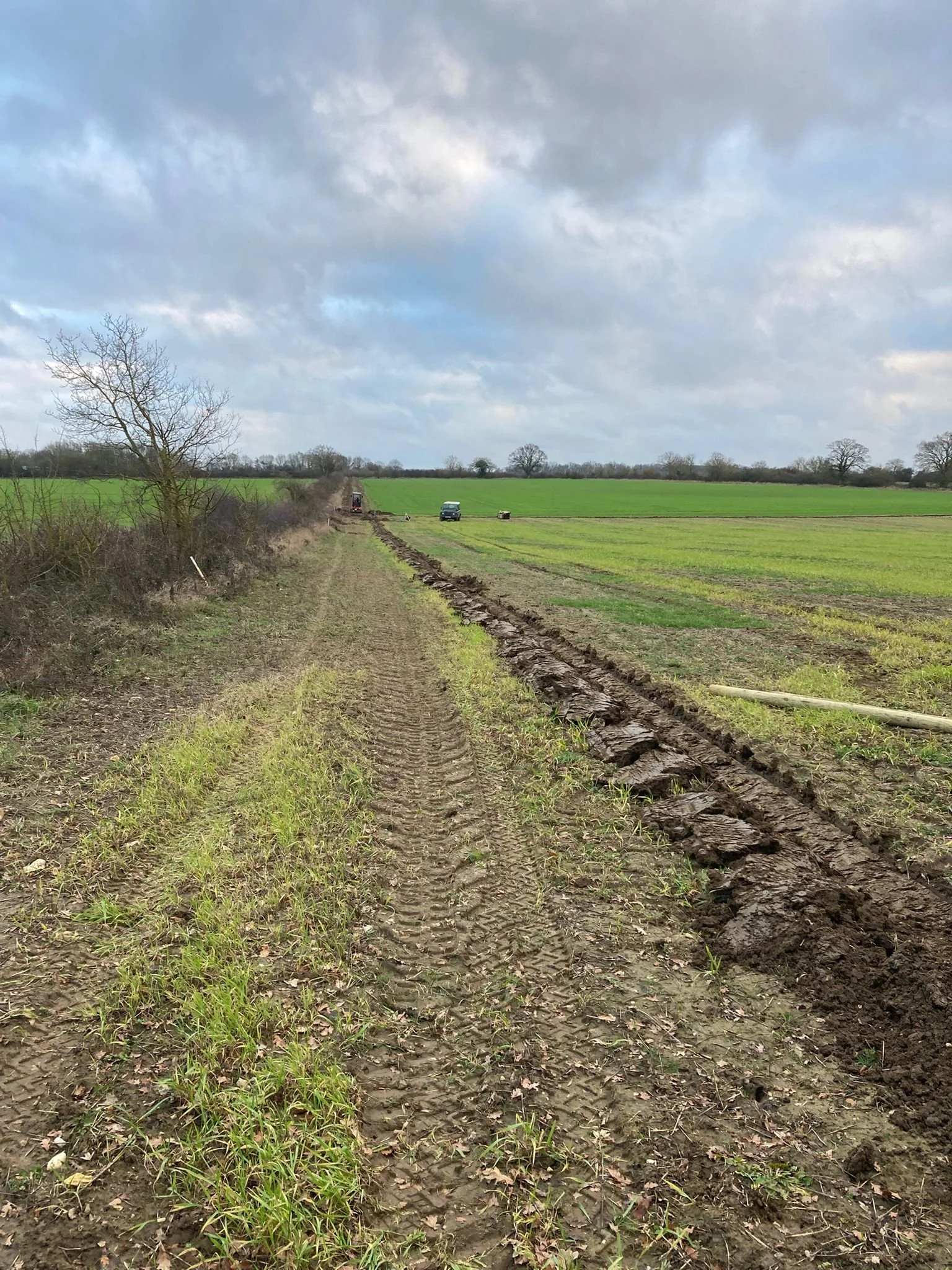
The perimeter fence line was marked out
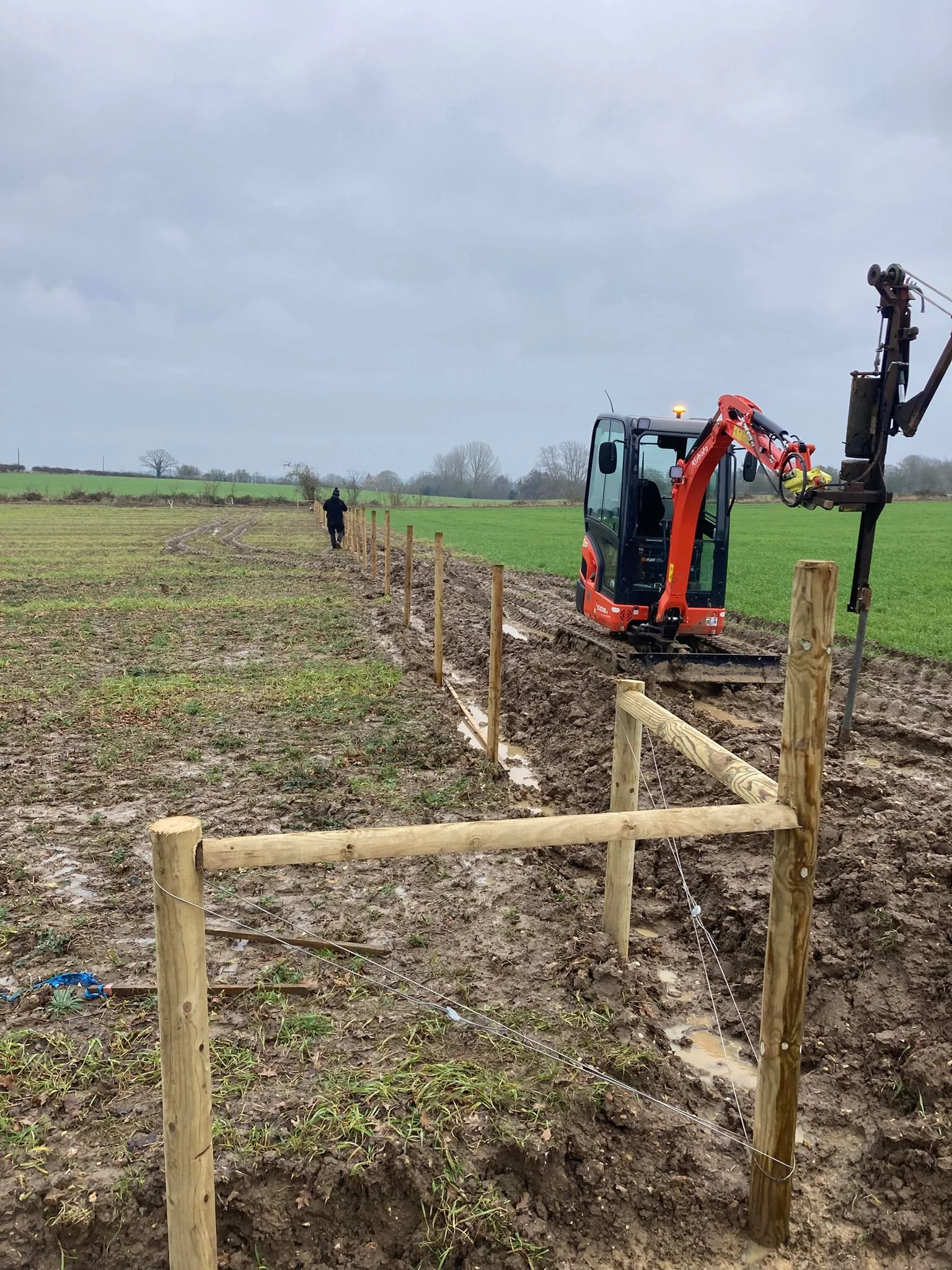
We installed during a very wet period
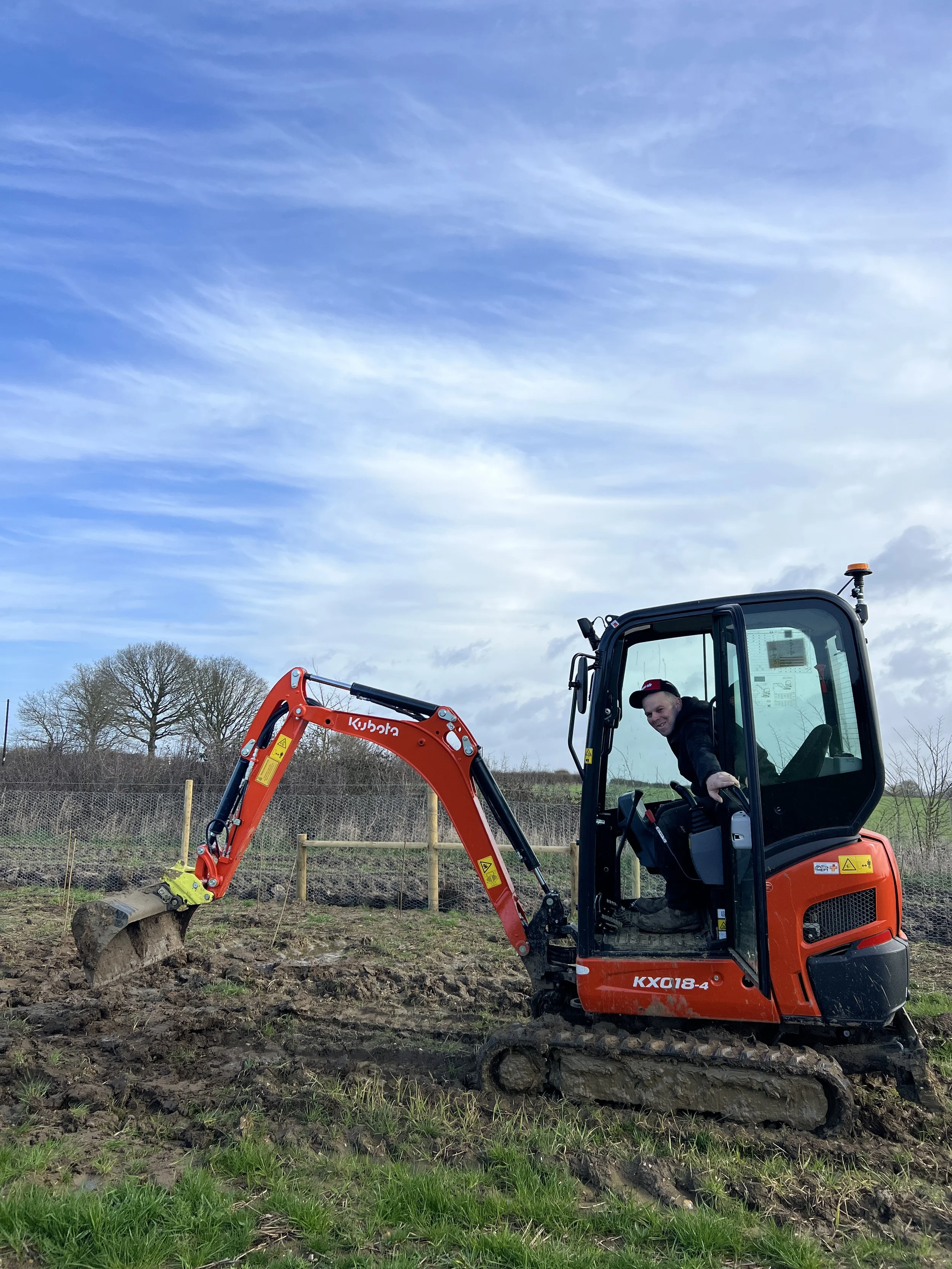
Our new Kubota helped to dig trenches for the fencing
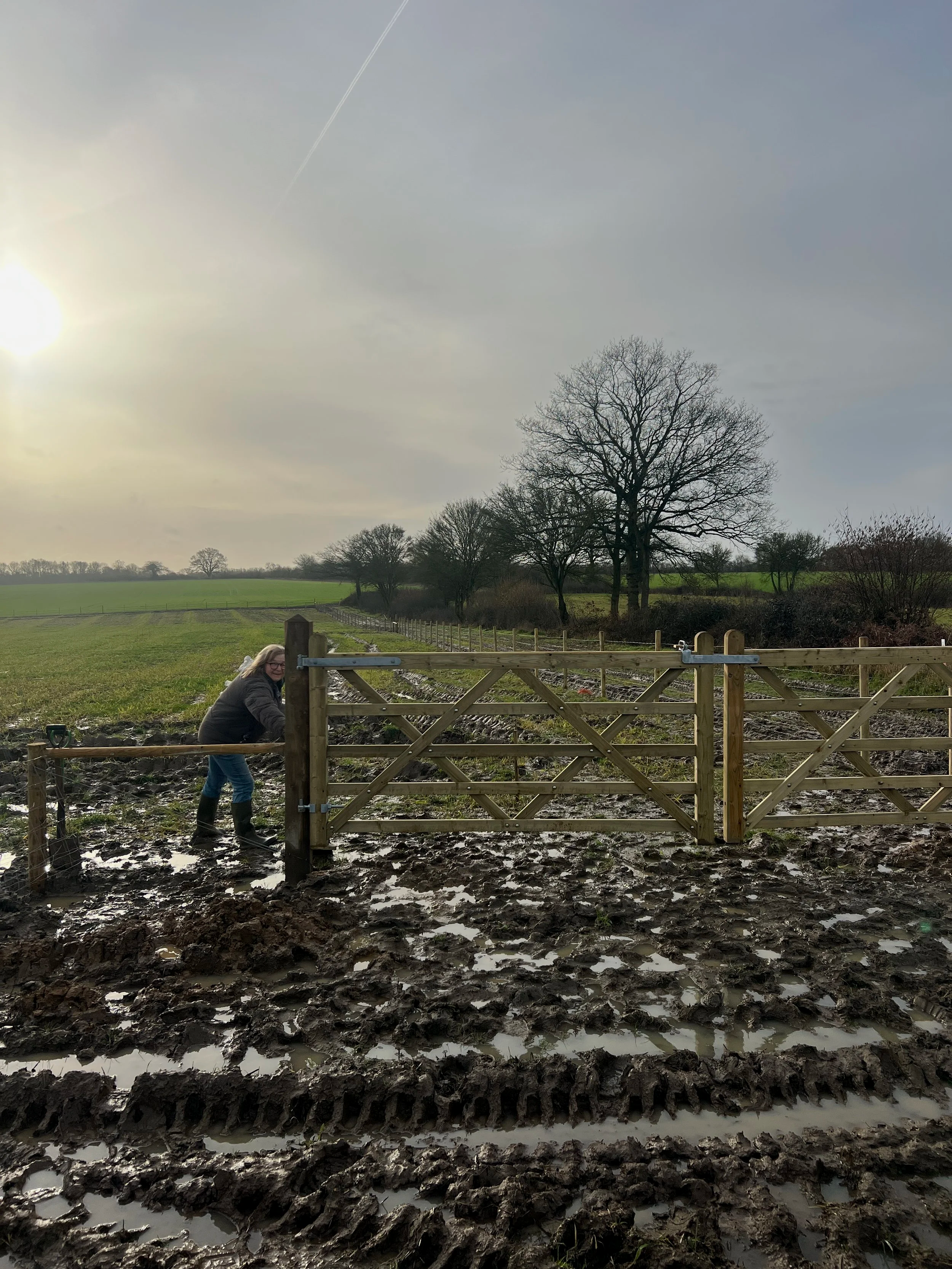
Mud and water everywhere!
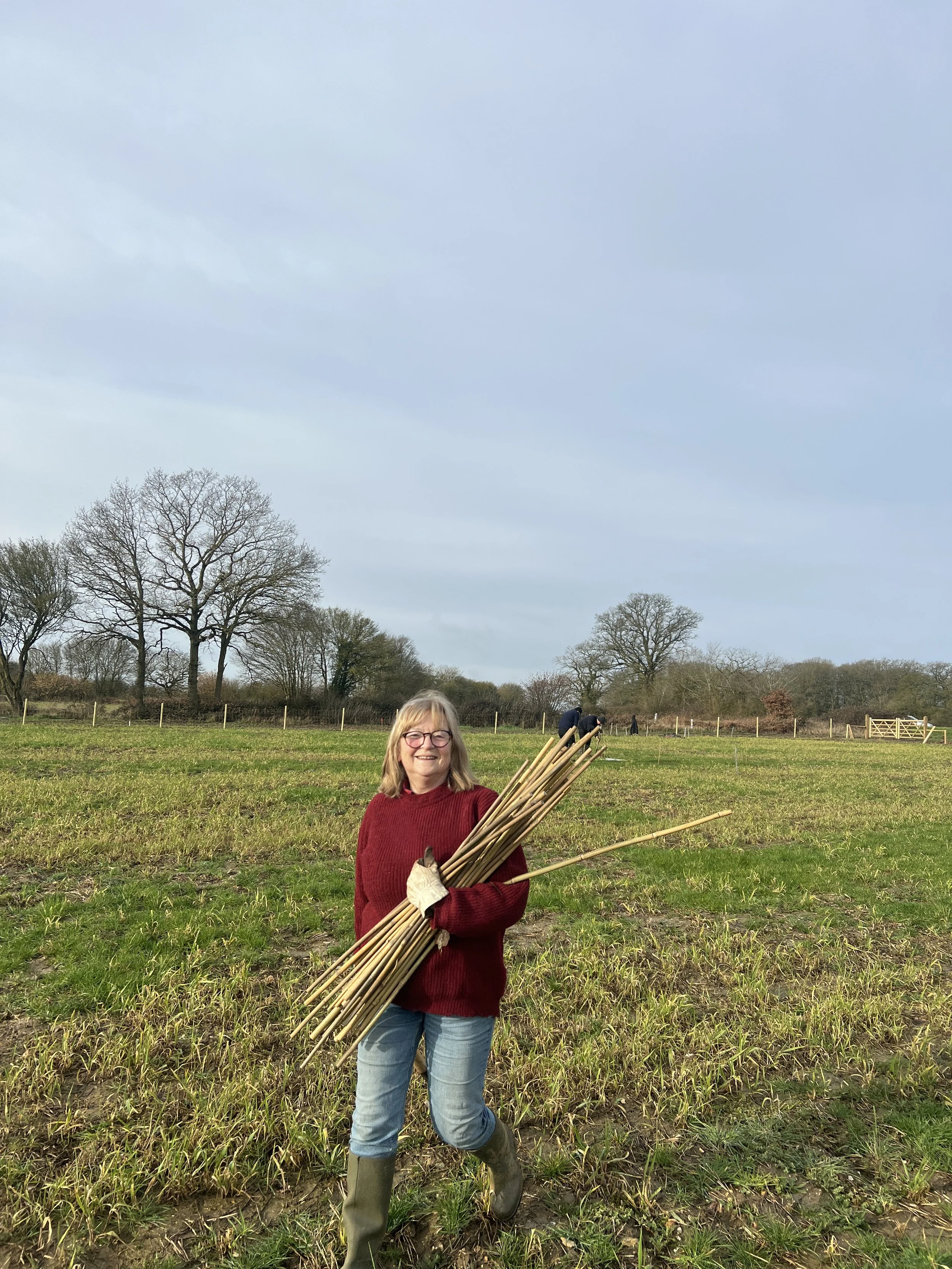
Tree and hedge locations were marked out with colour-coded canes
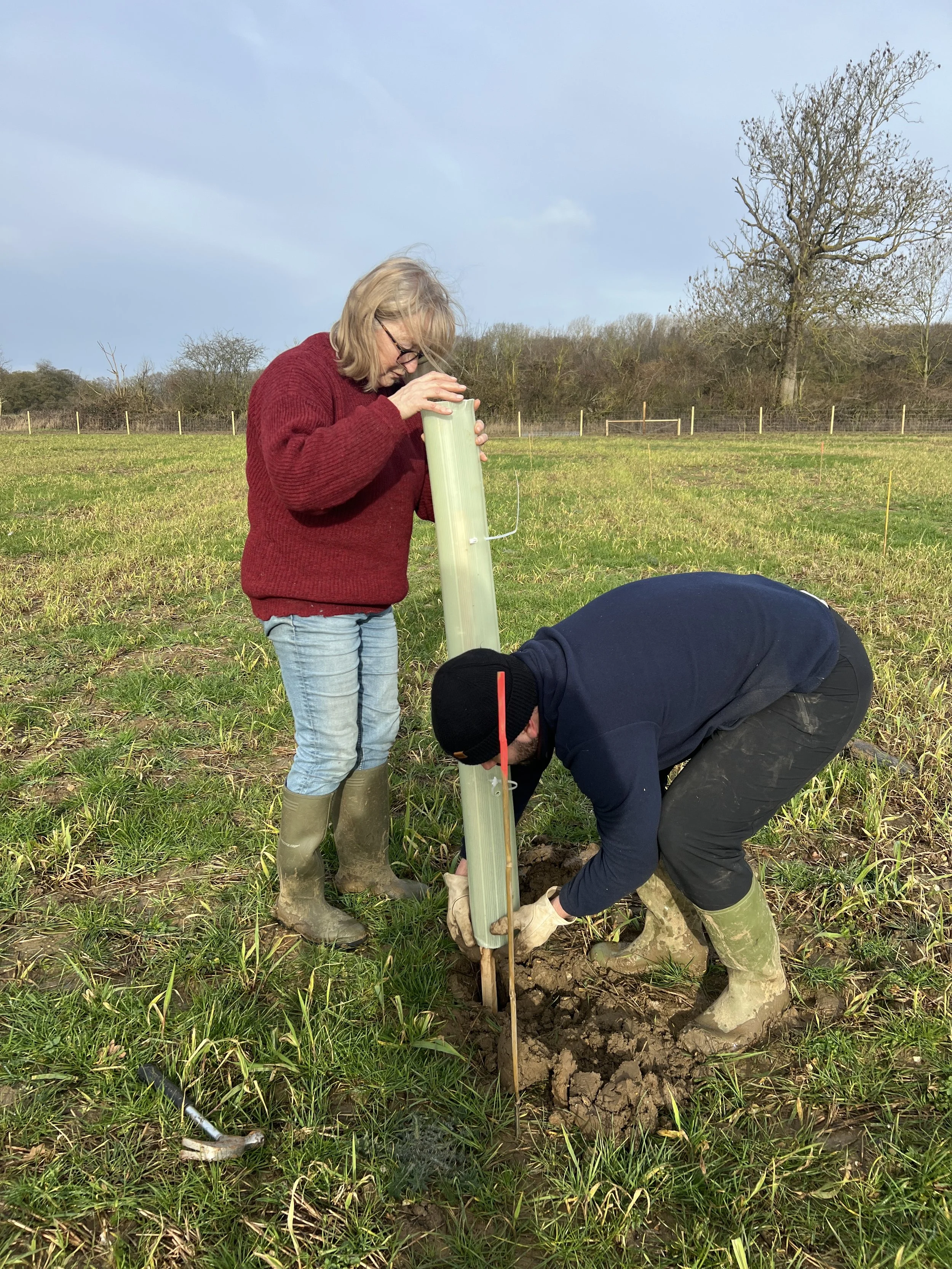
Tree planting began in earnest once the ground had dried out a bit
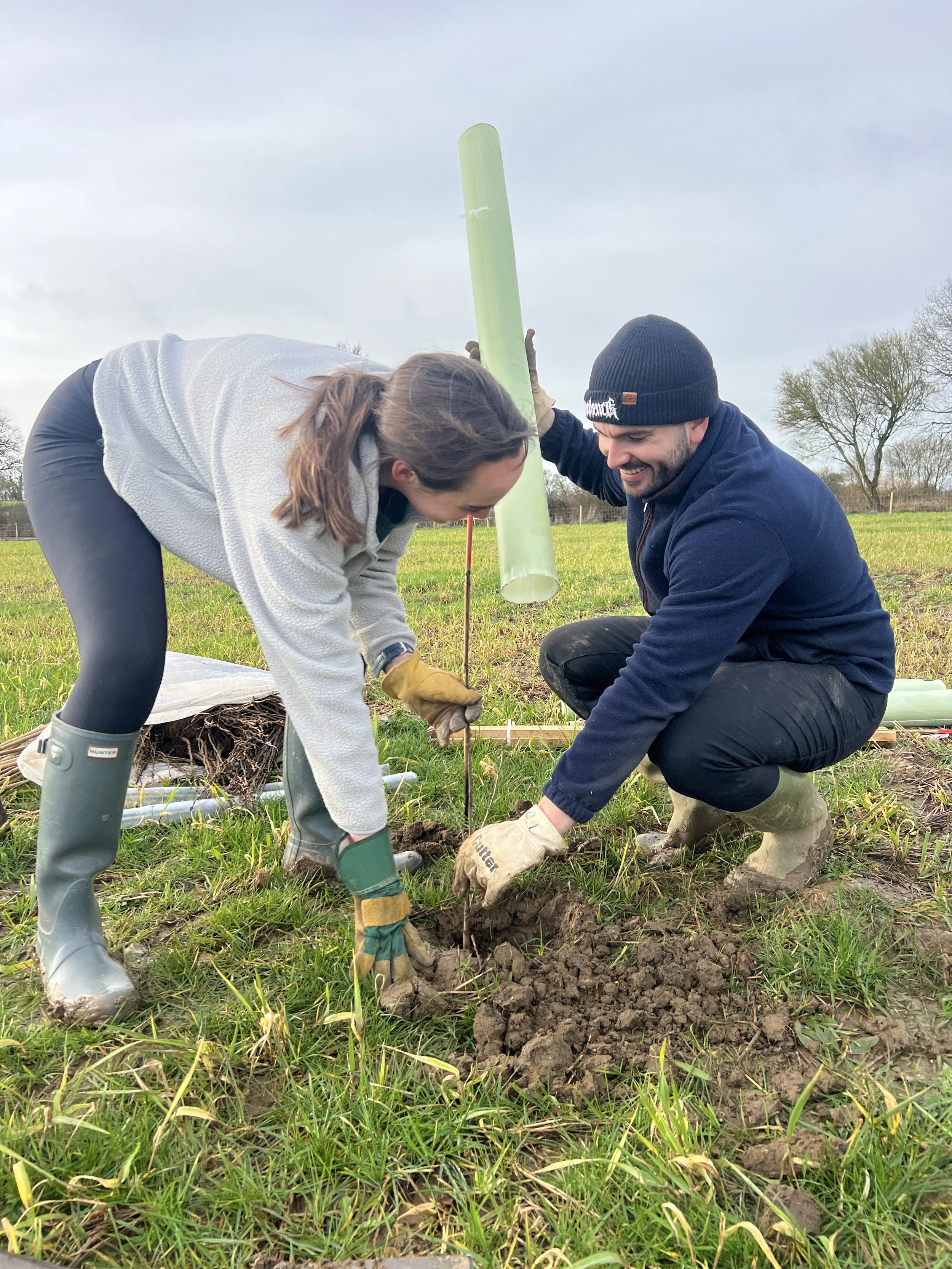
Teamwork ....
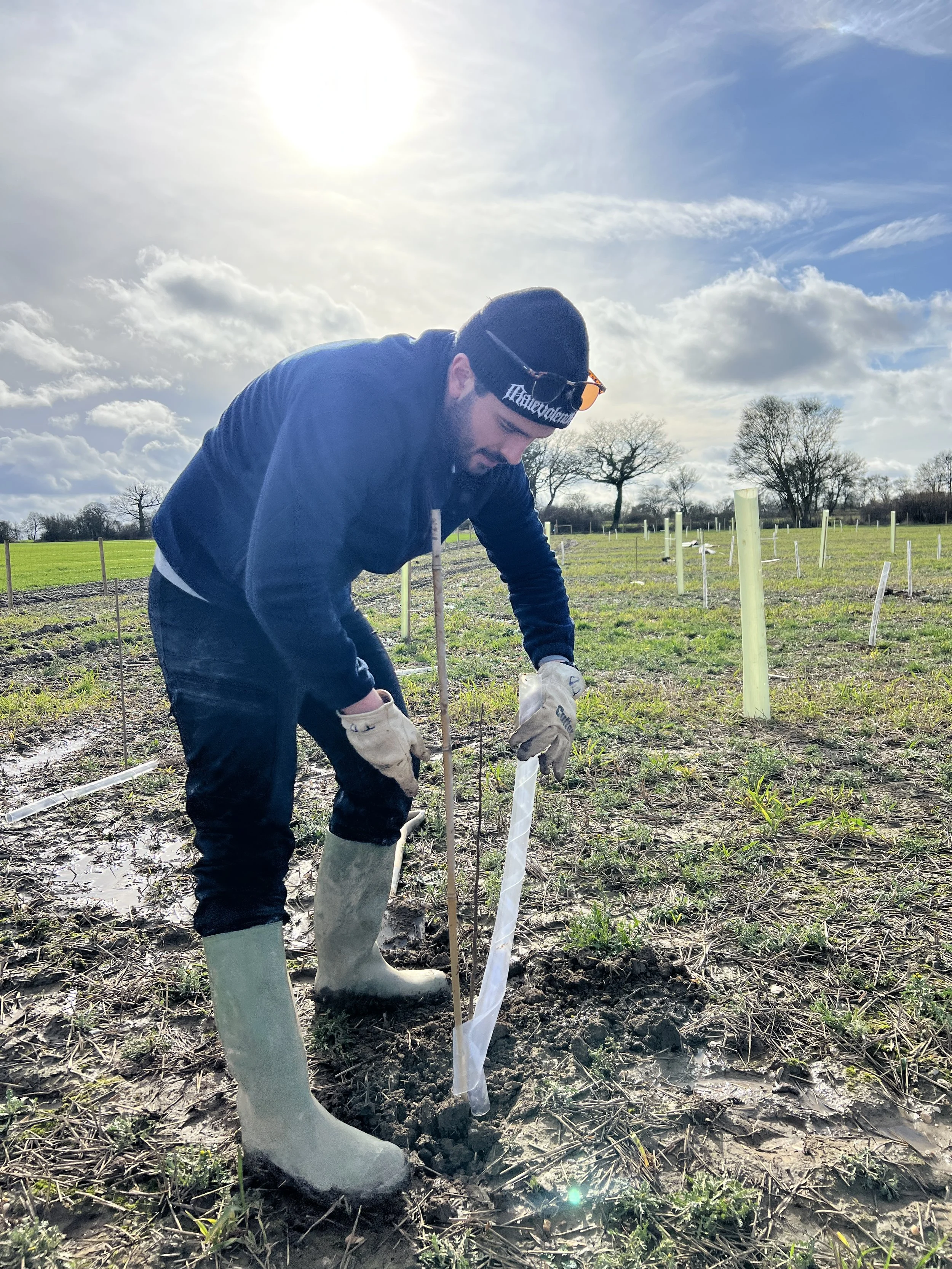
Oak, field maple, small-leaved lime, hazel, hornbeam and more native species ....
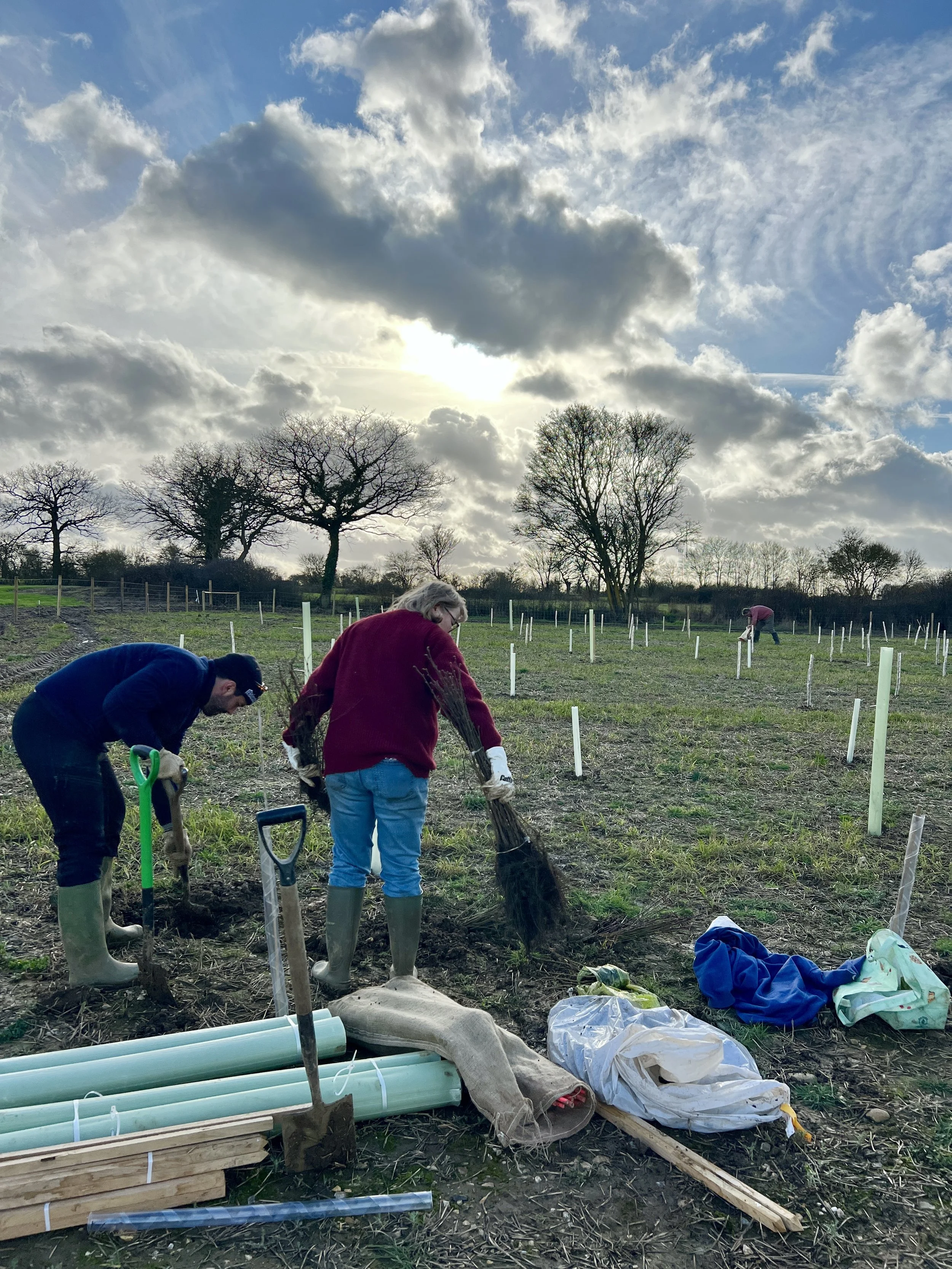
.... Until 1,000 trees and 100m of hedge were planted....
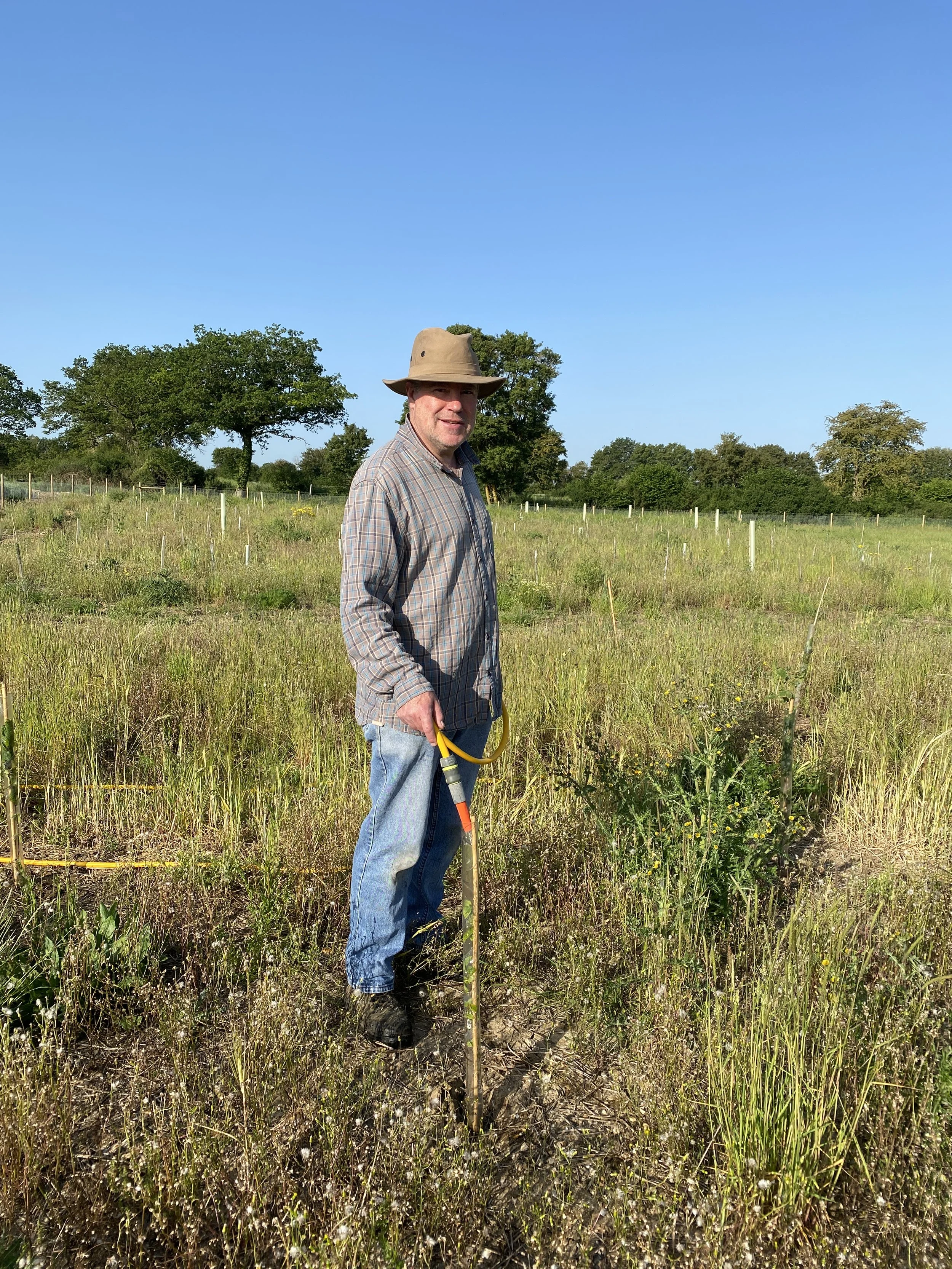
By the end of May, drought conditions were evident ... buckets and hose to the rescue
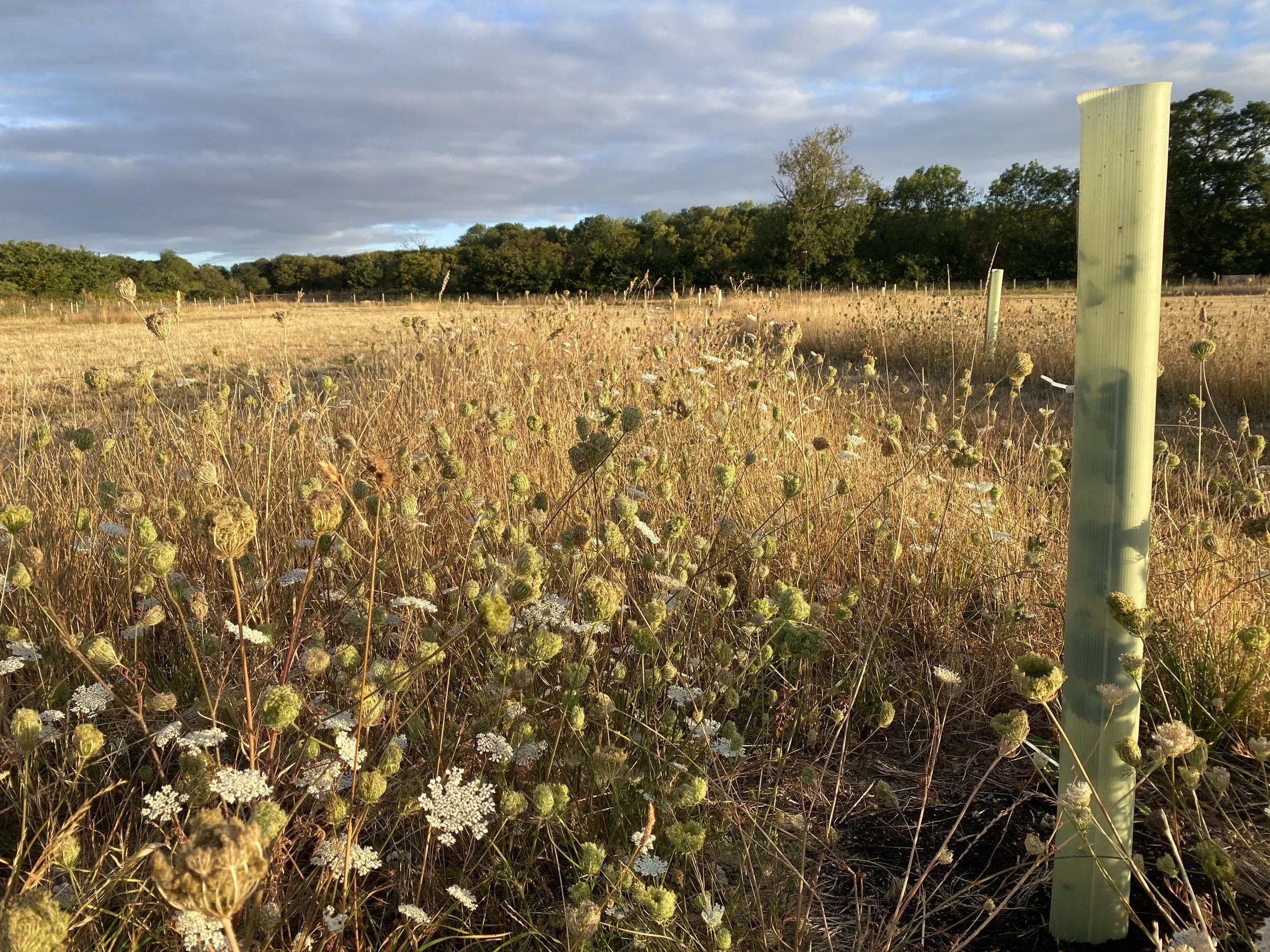
By August, the entire site was parched - only wild carrot appeared to be thriving!
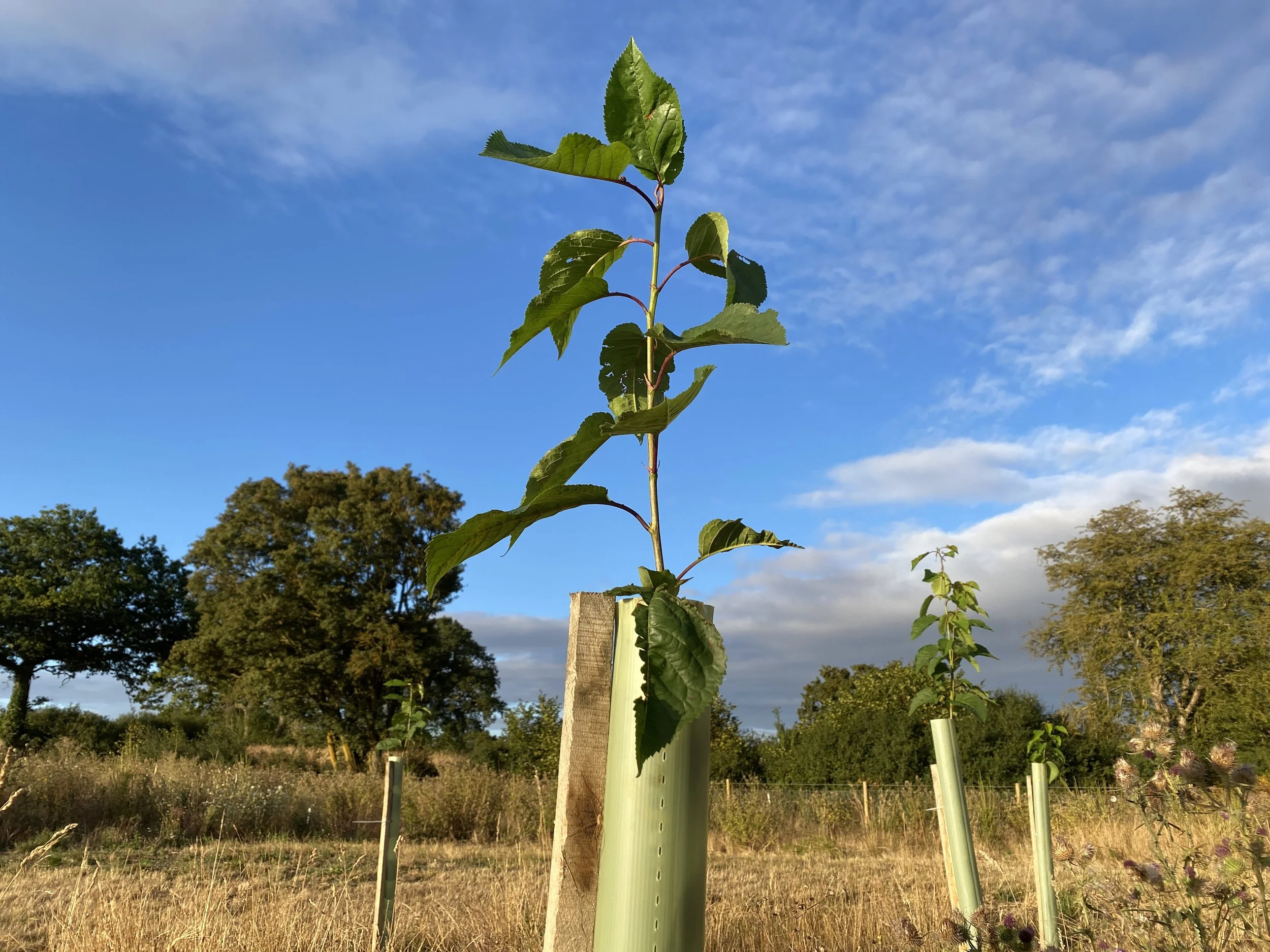
But some trees, such as wild cherry, had peeped above its tree shelter! Hope.
SURVEYS, MAPPING & RECORDING WILDLIFE
We’ve recorded what went on in Brands Field, now Primrose Wood, with areas re-named ‘Brands’ to keep the historic name alive. Crops have been grown and harvested since we can remember (pictured below with horses ploughing the field). We had the site mapped and banged in trig points so that we can number burial plots - and find them again! We keep an ongoing list of the wildlife we see - already there are over 100 plant species and 20 or so birds nesting and foraging on the site including whitethroats, yellowhammers and linnets in the old perimeter hedges and skylarks singing their hearts out overhead, high in the sky. And Olivia, Juliet’s sister, painted our vision of the developing woodland, with Suffolk vernacular names for groups of trees and evocative places around the site.
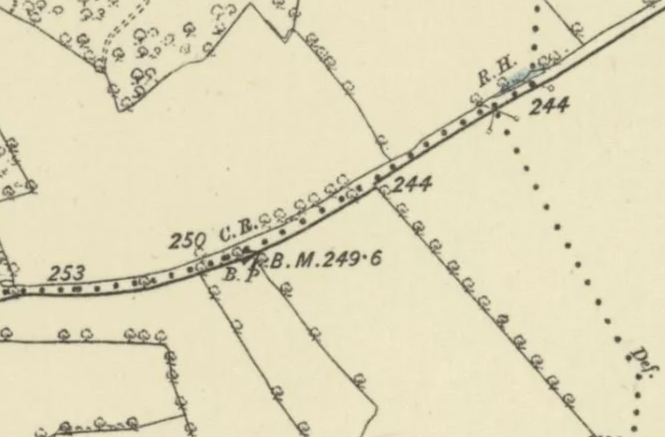
The field system hasn't changed much since this 1895 Ordnance Survey map
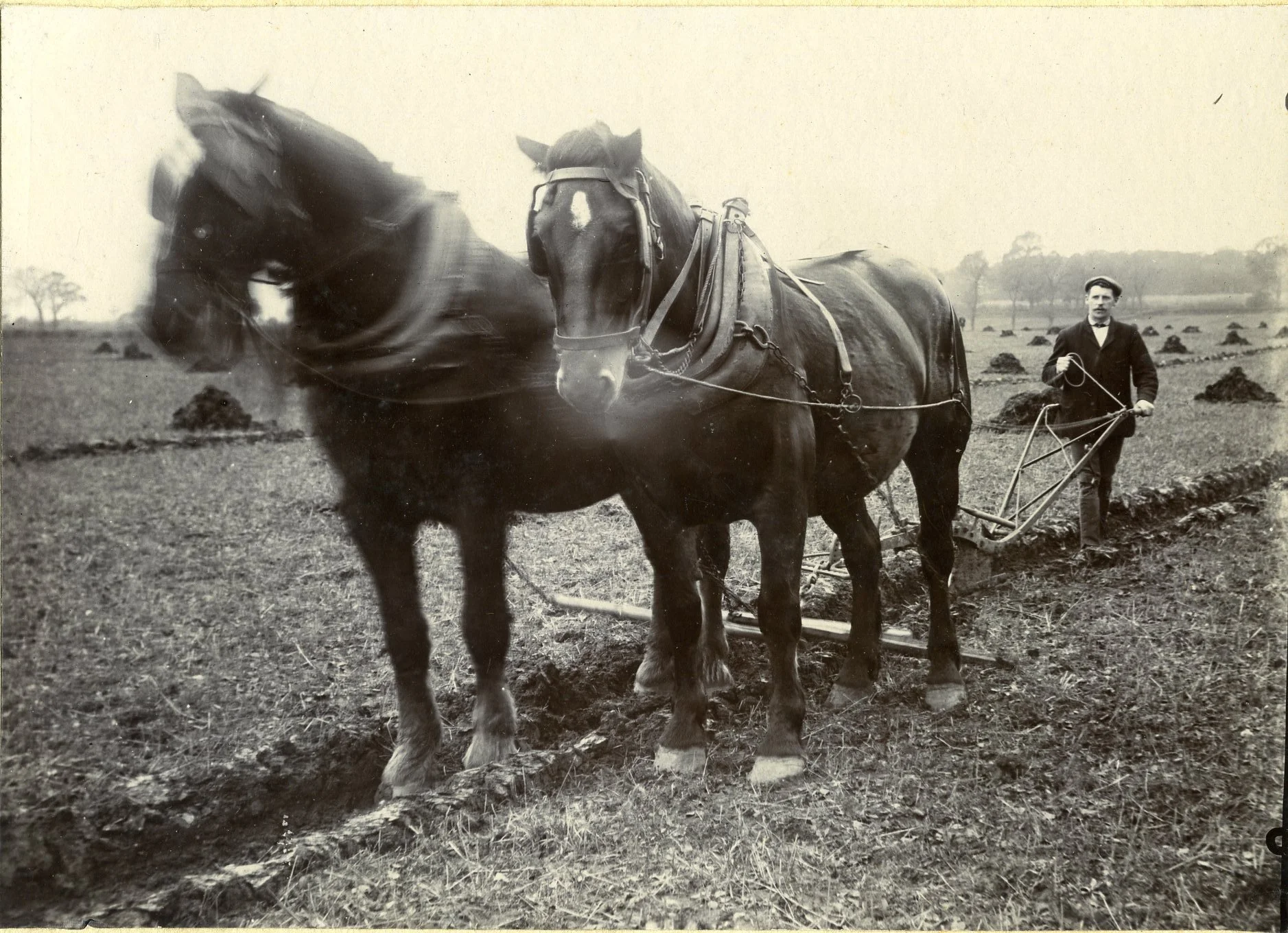
Arthur Goodchild ploughing Brands Field with small muck hills in the background
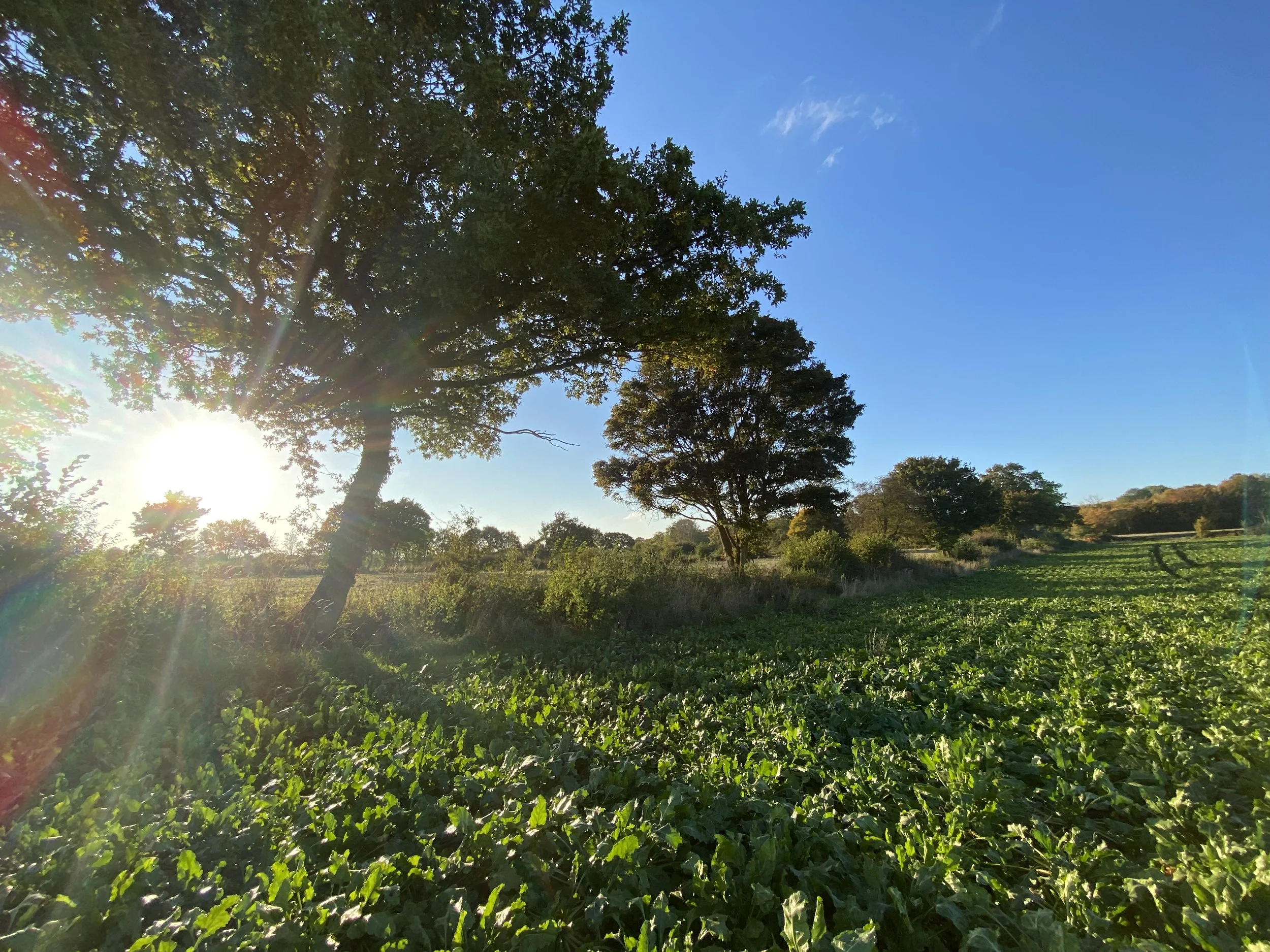
Brands Field in sugar beet in 2024
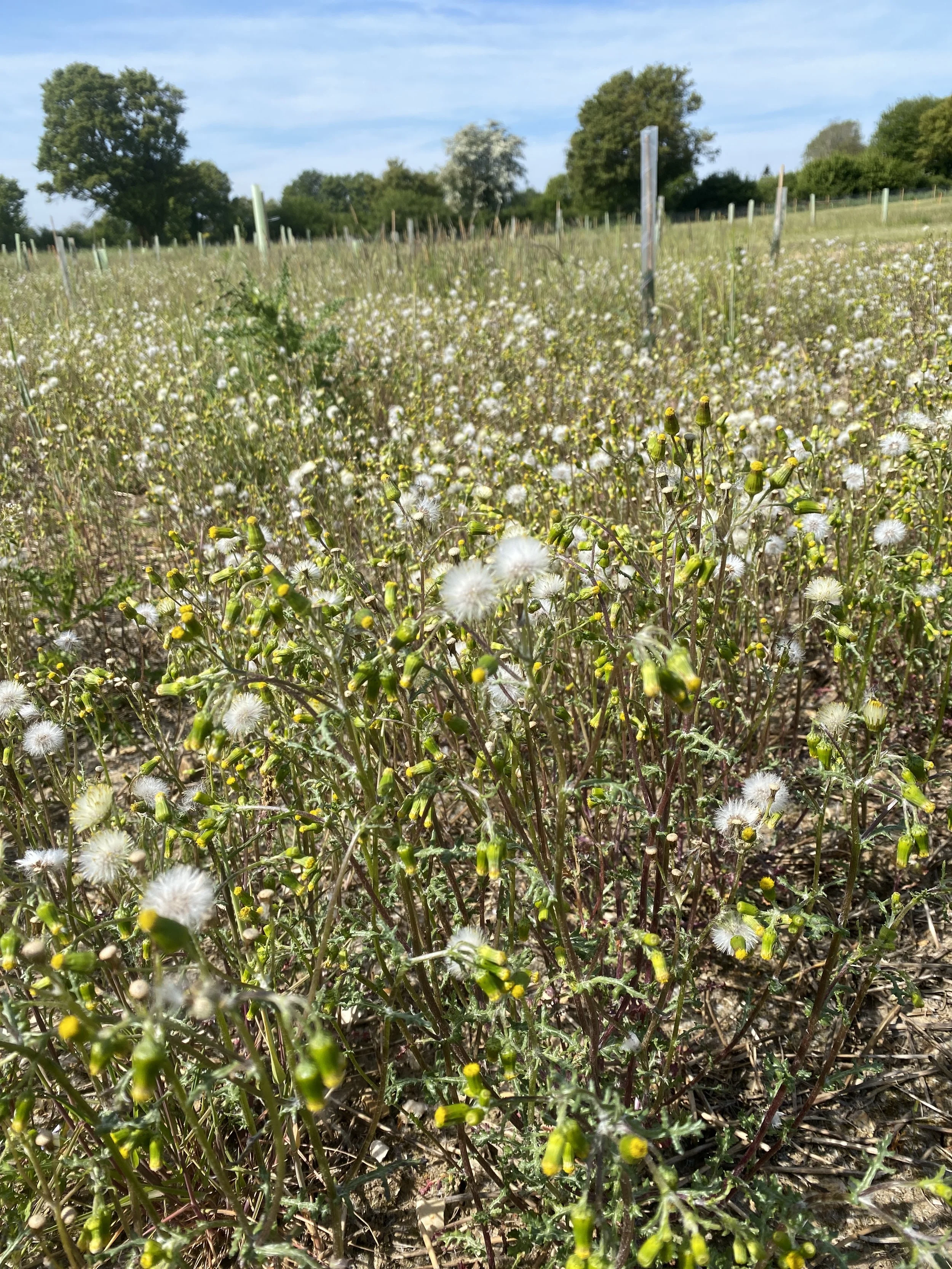
Plants were monitored from the beginning - the goldfinches loved the fluffy groundsel seeds
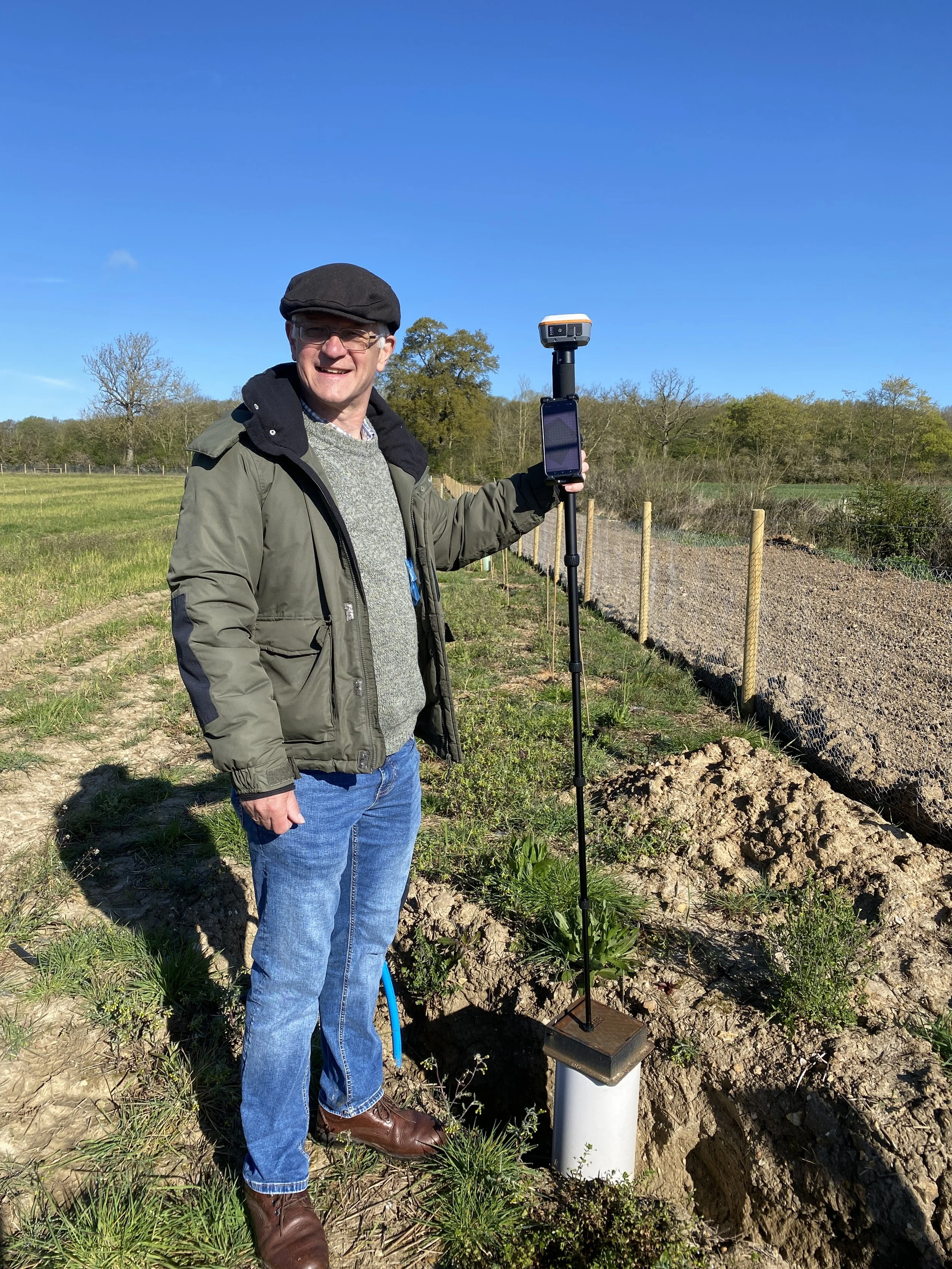
Jonathan Smith from Pear Technology surveyed and mapped burial plots over the whole site
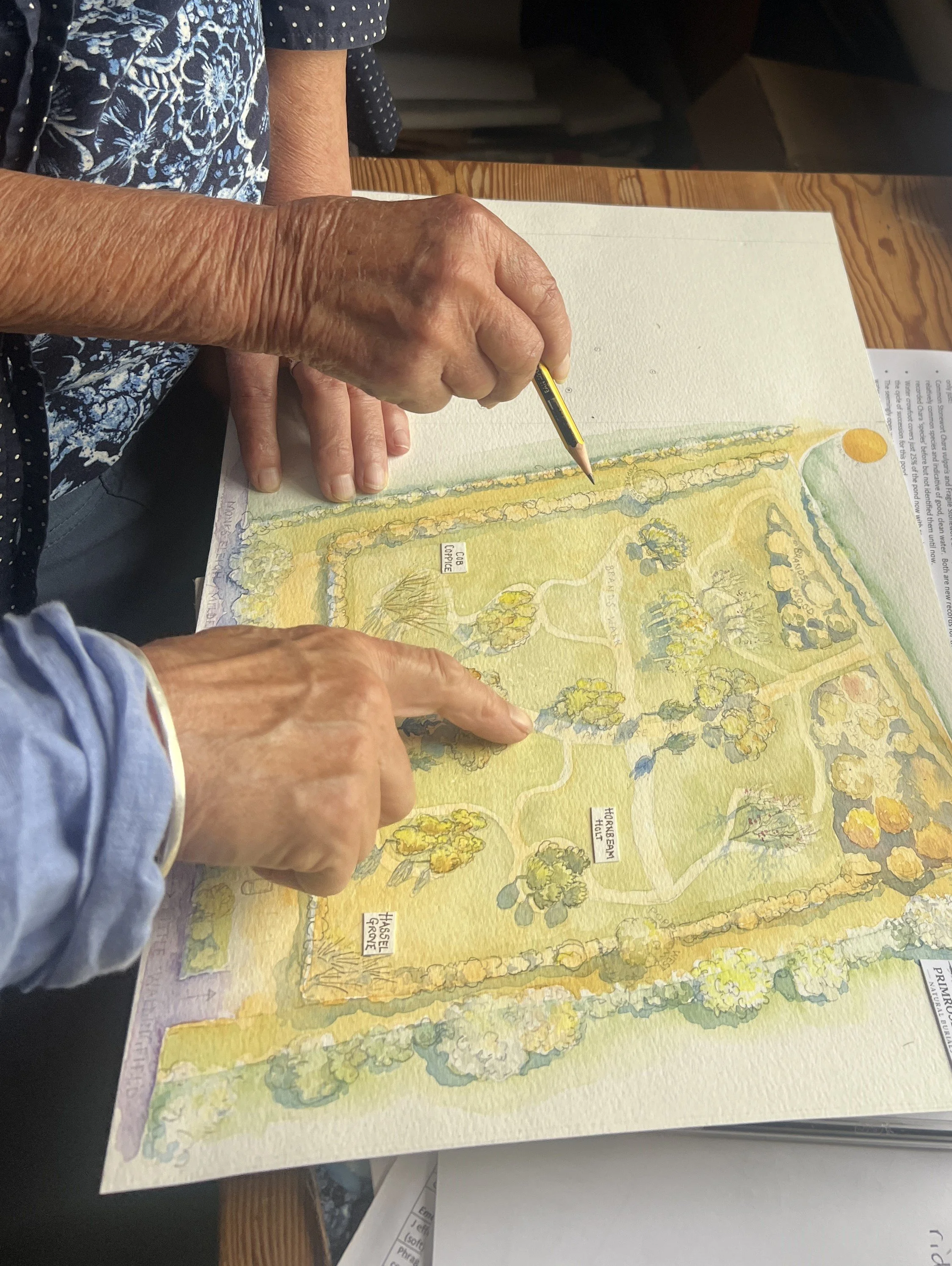
Olivia painted our vision of the young developing woodland with hazel groves, clumps of wild cherry and hornbeam
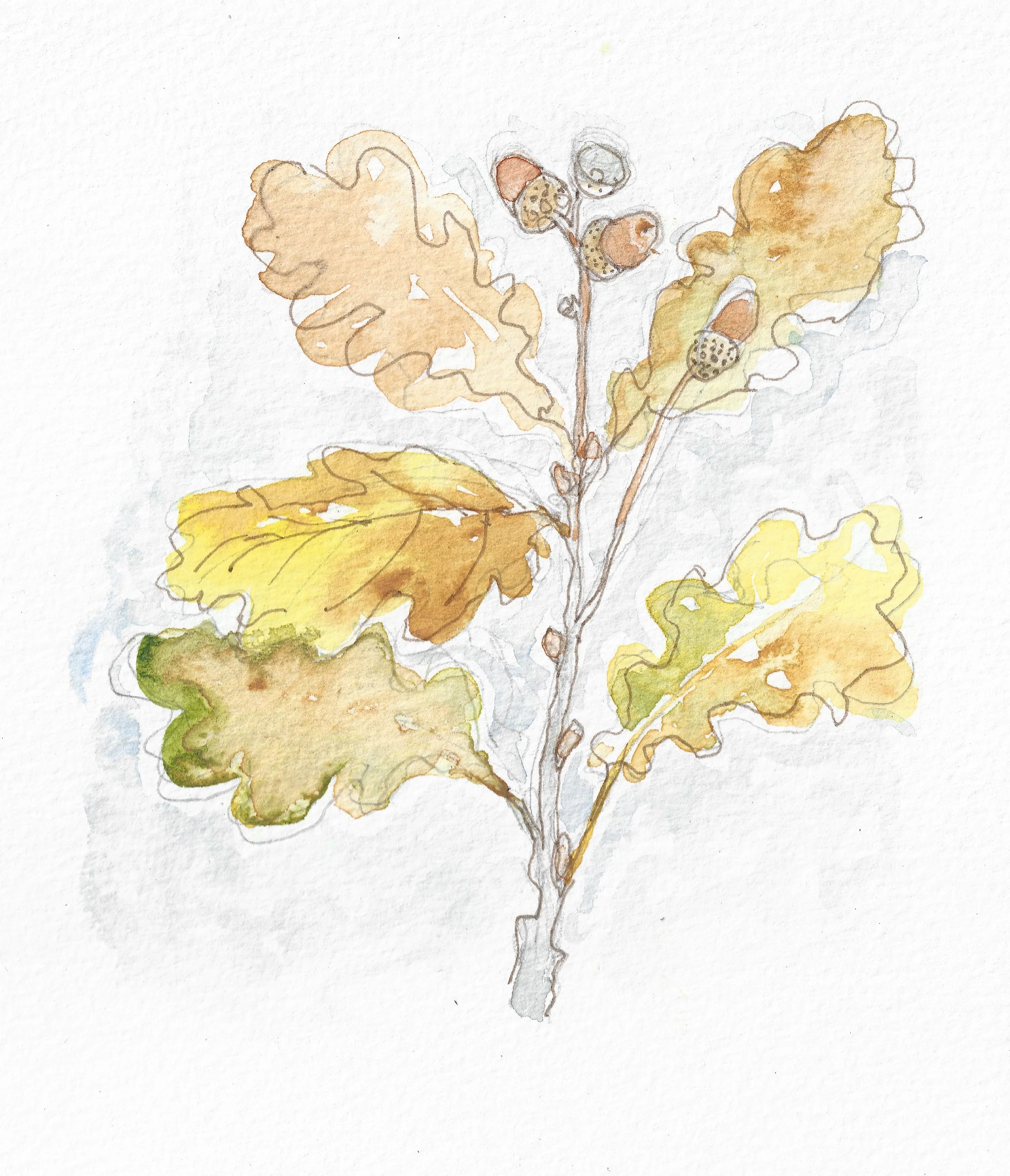
Olivia painted lots of small images of what she saw on site .... young oaks peeping out of their tree shelters
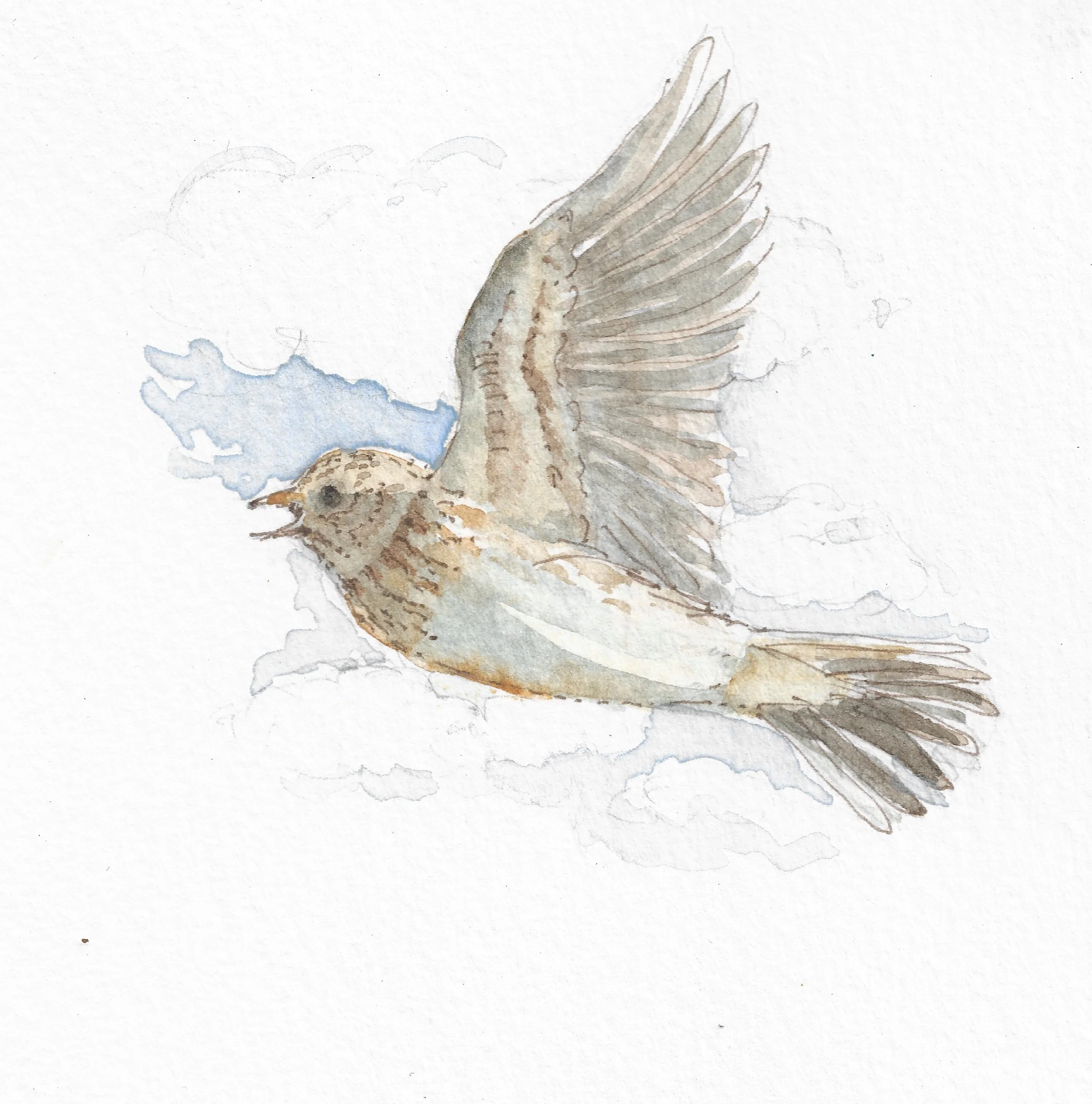
.... including skylarks singing from on high!
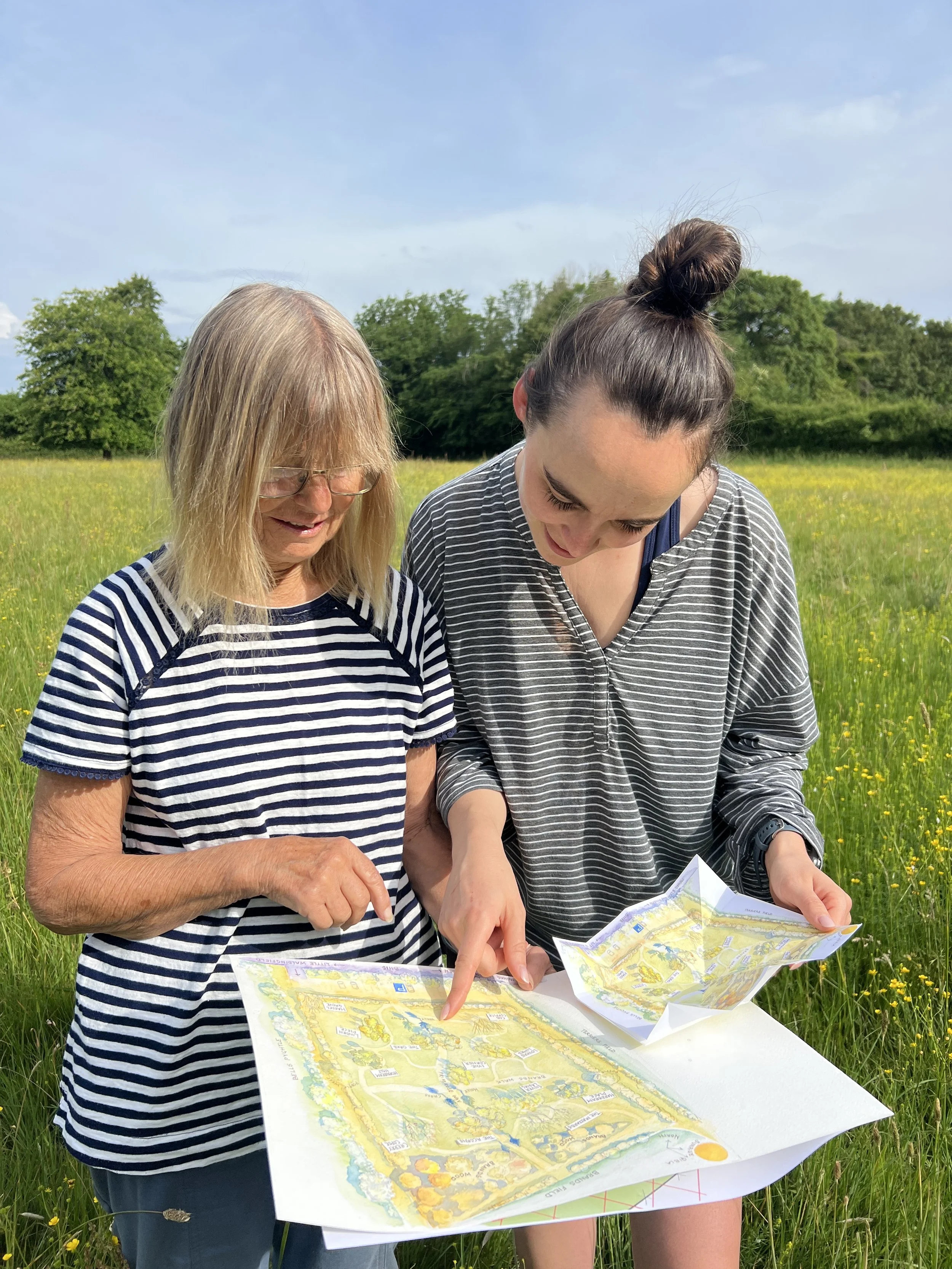
Finished!