
WHY THE PRIMROSE?
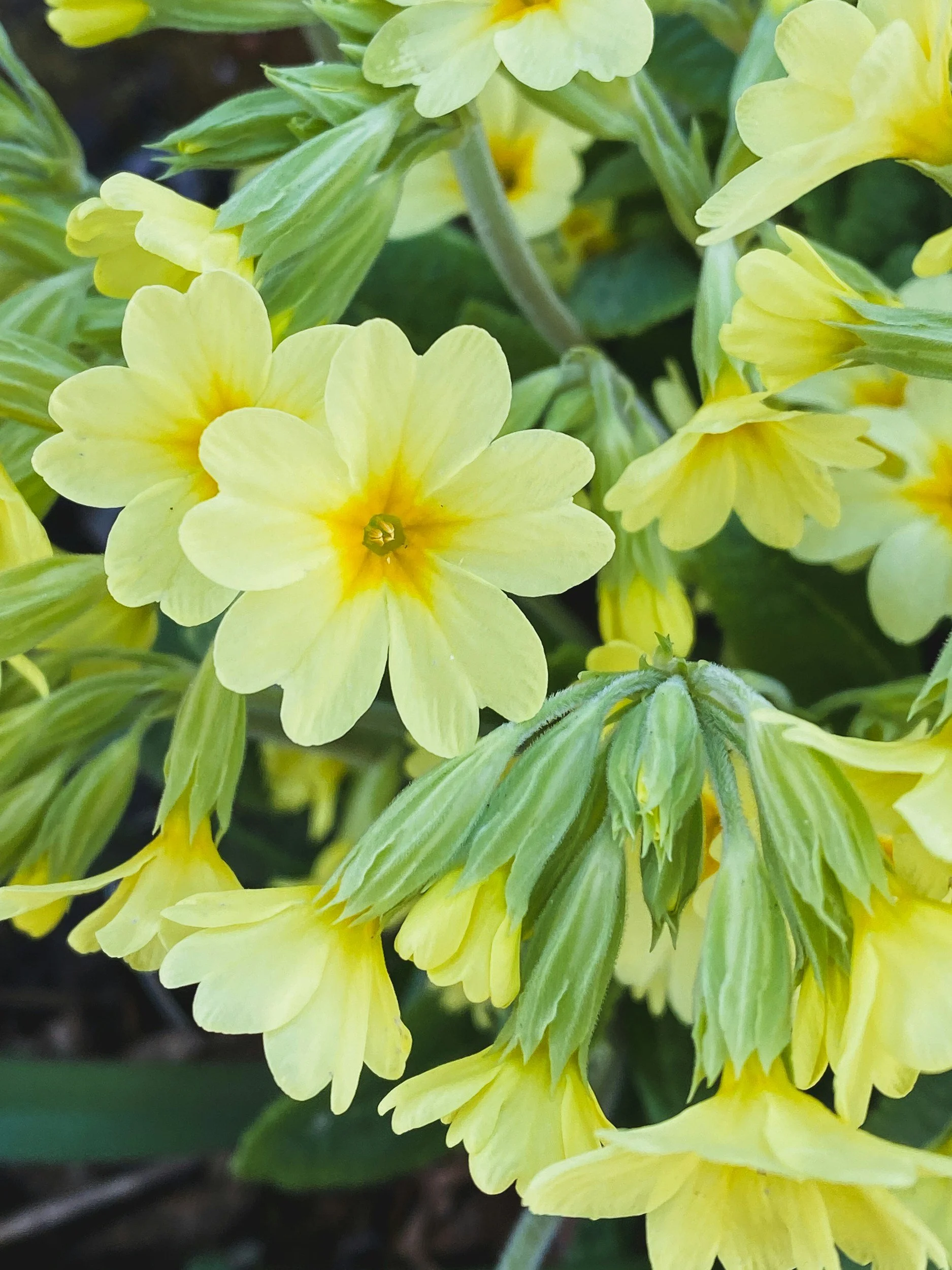
We chose the name Primrose Wood because of the hopeful and joyful story this pale-yellow spring wildflower tells. The primrose is the year’s ‘firstling’, symbolising the end of winter, with its slender tapering buds and the fair, fresh, pink-stemmed flowers that bloom with lavish generosity year after year from March to May. Primroses have grown along hedges and ditch-banks on the farm here for as long anyone can remember.
In the language of the woodland, the primrose is more than just a sign of spring - it is a living emblem of the values we hold dear at our natural burial ground. The primrose has long been a symbol of eternal love, ensuring that while a physical presence may fade with the death of a loved one, the connection remains everlasting.
By blooming at the very first sign of spring, primroses also represent youth, new beginnings, and optimism. In this sacred space, the primrose serves as a gentle reminder that memory is a living thing; even in loss, there is a promise of renewal and a quiet, hopeful beauty that endures through the seasons.
Here, at Primrose Wood, we now invite you or your loved ones to find peace in this growing woodland that will be here in perpetuity.
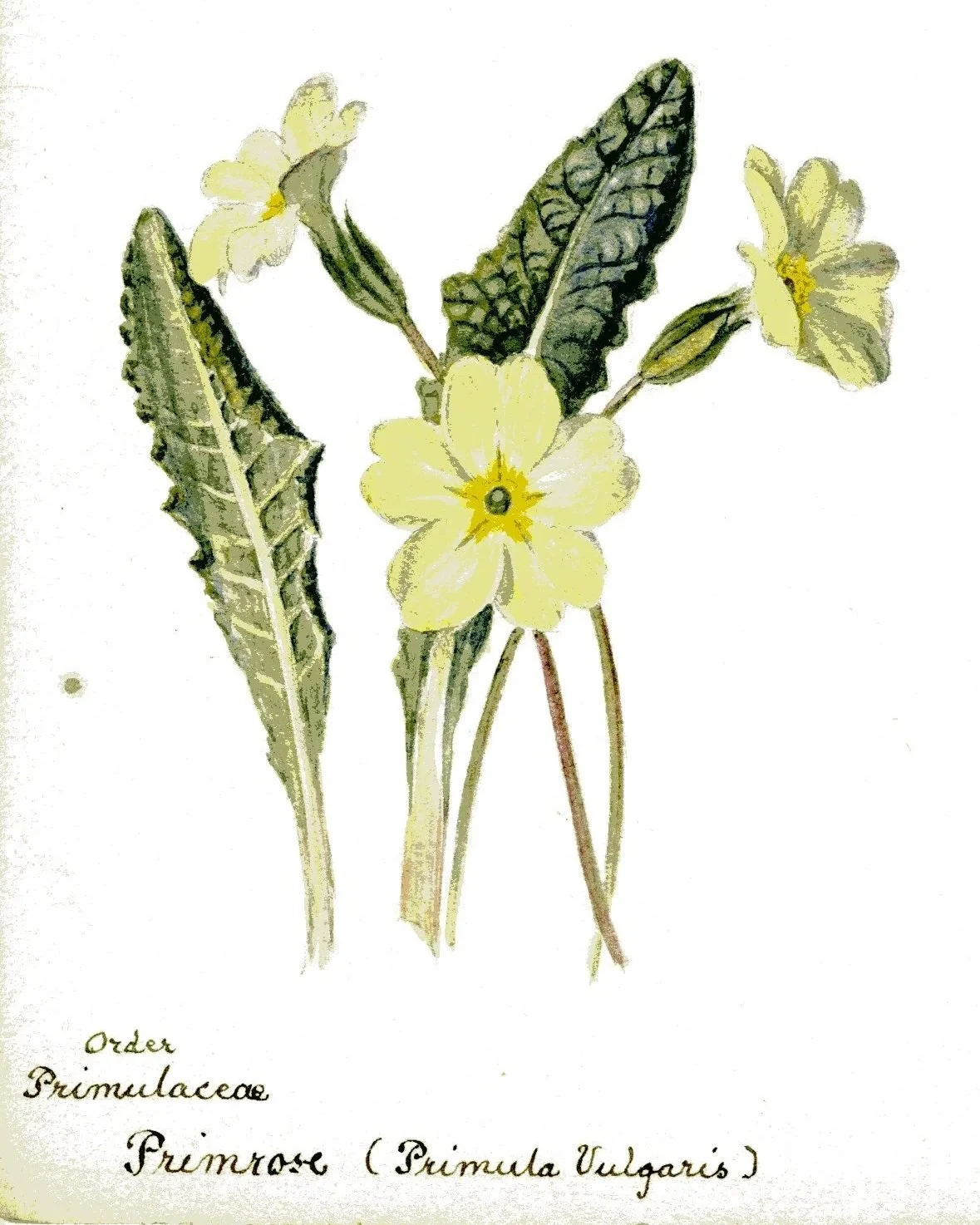
Watercolour painted by Susan Hawkins, ancestor of the current Hawkins family, who lived at Milden Hall in the 1800s.
How do you, or your loved one, relate to the primrose?
Through history, people have related to this modest flower in different ways - some of these might resonate with others.
Celtic Lore: Druids believed primroses repelled evil spirits. Large patches were thought to be gateways to the fairy realm, and they were often planted near doorways to encourage fairy blessings.
Victorian Floriography: Popularized in the Victorian era, the use of flowers to navigate strict social etiquette, allowed for secret, often intimate, conversations. A popular gift in the Victorian era, a primrose symbolized "I can't live without you" or young, innocent love.
In Norse mythology: The primrose is sacred to Freya, the goddess of love.
Shakespeare frequently used the primrose in his plays to convey youthful beauty, fleeting pleasure, premature death and evocative lovers’ meetings in woods "And in the wood, where often you and I Upon faint primrose-beds were wont to lie..." (A Midsummer Night's Dream).
Royalty: The primrose was a favourite flower of Queen Victoria.
Protection: Historically, primroses were carried as charms or planted around homes to ward off misfortune.
Femininity: In some traditions, each petal of the flower is thought to represent a stage of a woman's life.
Medicines: The roots and flowers have been used for respiratory ailments and anti-inflammatory ointments; and herbal teas for anxiety, insomnia and migraines amongst other remedies.
Fairies and dairy farmers: A Scottish legend states that if you want to see a fairy, you have to eat a primrose. The flower also offered a protection against evil spirits if you put them on your doorstep, and if you placed a primrose in your cowshed, fairies would stop stealing your milk.
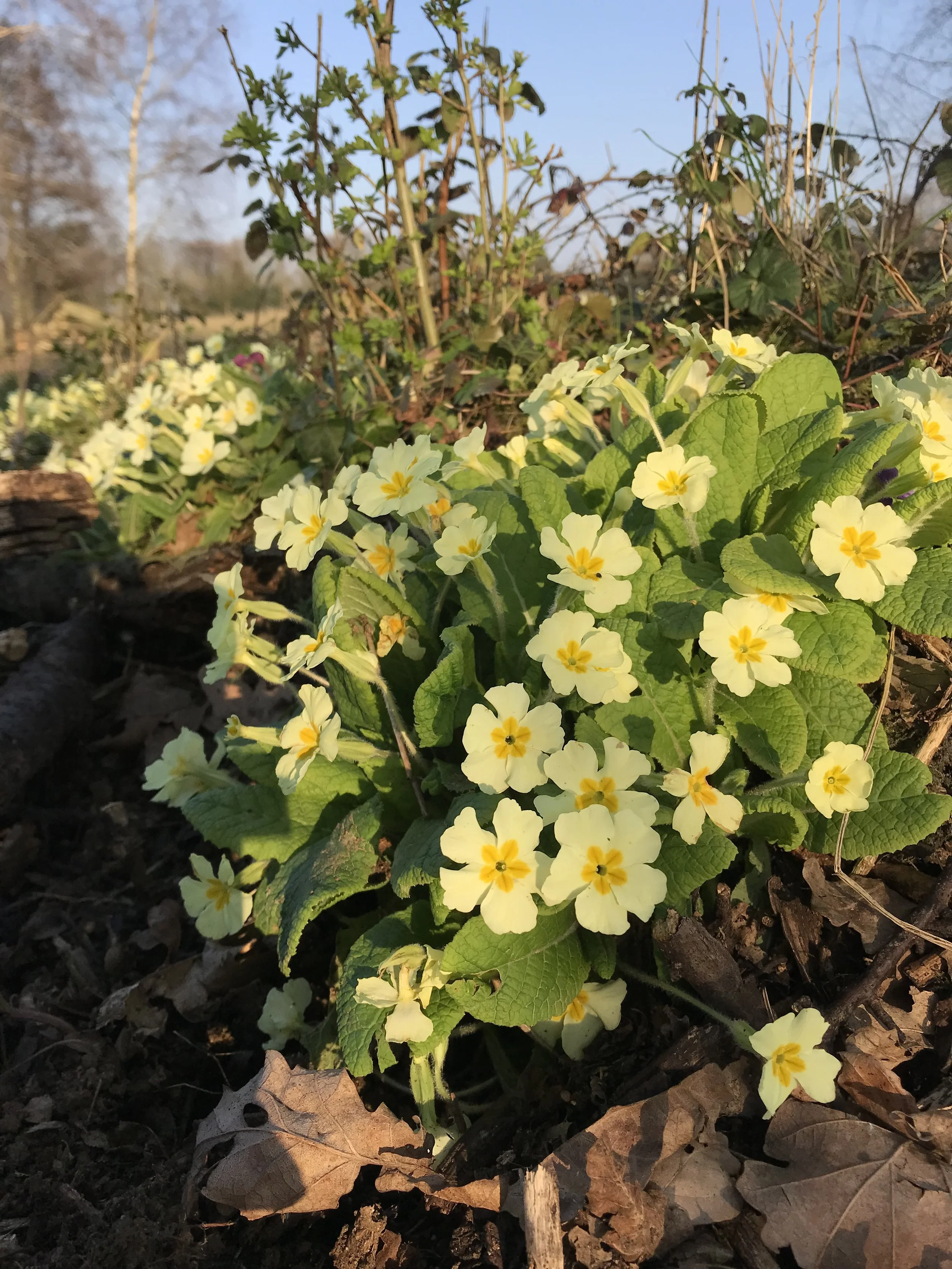
There is nothing more moving than to find on an arid winter’s day an early primrose, miniature but fully out, with its innocence giving the lie to the surliness of the season. And even before the flowers bloom, there are leaves, themselves miracles of texture and design, thickly quilted all over in a maze of lines; woolly at the back, with the lines standing almost clear of the blade; crinkly edged, furled and narrow in youth, broadening and flattening as they grow. (Woodland Plants by H & R Tanner, 1992)
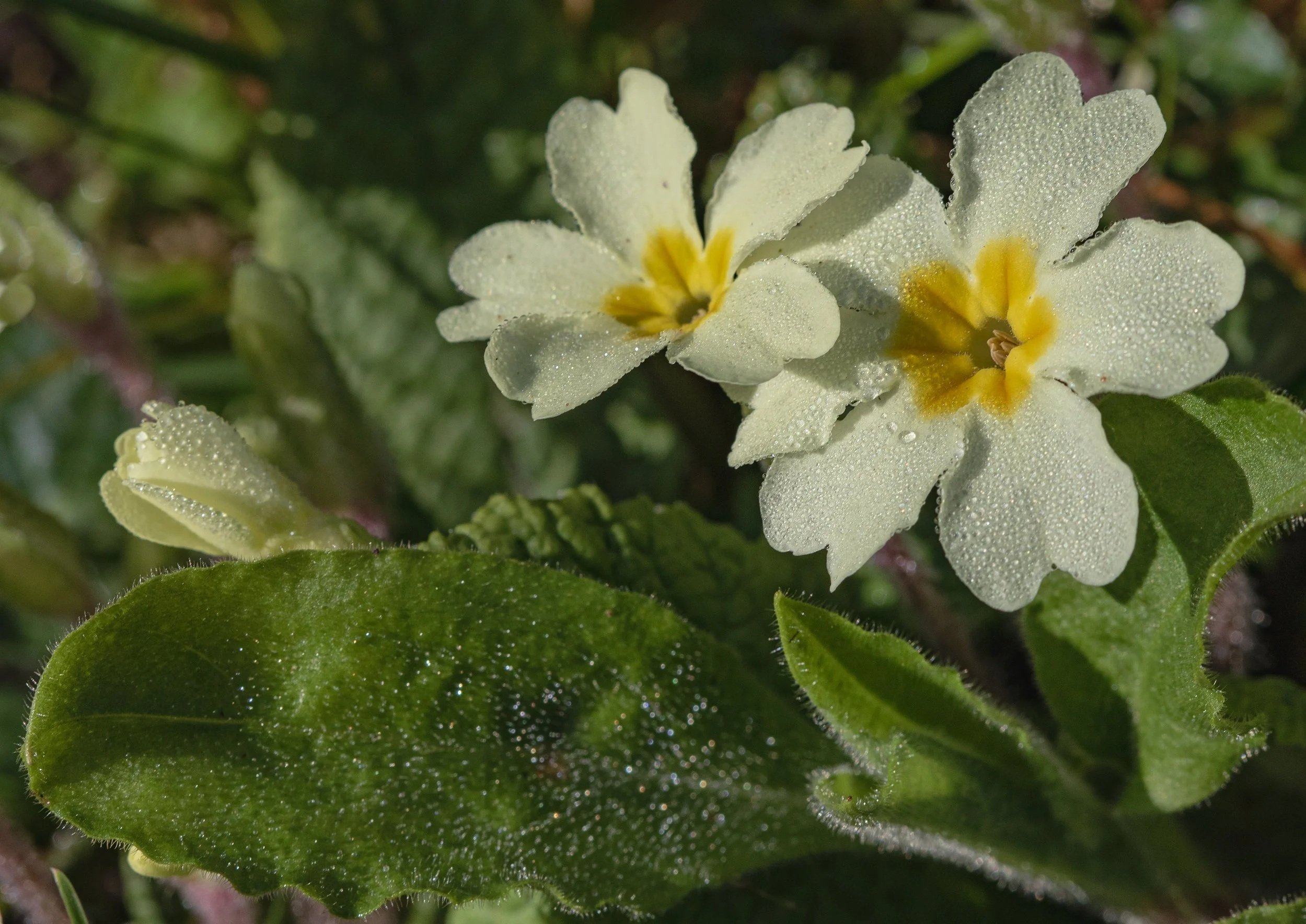
It would be surprising if magic had not been found in so well beloved a flower. It has all the qualities men most love: a delicate pale luminous colour, more green than yellow, with a gold star in the centre; a shape so crisp and symmetrical that it might have been stamped out with a scalloped cutter; a fragrance fresher and more virginal than that of any other flower; and abundance of growth.(Woodland Plants by H & R Tanner, 1992)